G4
We are to love God with all of our heart, soul, strength, and mind.
Category: God & Yeshua
Type: Positive
Form: Explicit
Source dataset: Old Testament
Uniqueness: Unique
Classical commandment: Yes
New Covenant Literal Application
Applies to Person Categories: Everyone
 Jewish
 K'rov Yisrael
 Gentile
More explanation about the icons and New Covenant Literal Application
The New Covenant Literal Application Code (NCLA) is an interpretive guide used by the authors to indicate which person categories a mitzvah applies to, and at what level of literal compliance.
Each card above groups one application level such as mandated or optional. The three people icons show whether that application is meant for Jewish, K'rov Yisrael, or Gentile believers, and the male or female symbols show whether it applies to men, women, or both.
This code reflects the authors' interpretive opinion and is provided for prayerful consideration. The icon view is only a visual summary; the detailed codes and source explanation remain available below for careful study.
Detailed codes: GFm - Gentile female, mandated | GMm - Gentile male, mandated | JFm - Jewish female, mandated | JMm - Jewish male, mandated | KFm - K'rovat Yisrael female, mandated | KMm - K'rov Yisrael male, mandated

Bible references
Key NT Scriptures
- John 14:21-24
- 1 John 4:20-21
- Luke 10:25-28
- Mark 12:28-30
- Matthew 22:33-38
Key OT Scriptures
- Deuteronomy 6:5-9
Bible verses copyright: PUBLIC DOMAIN except in the United Kingdom, where a Crown Copyright applies to printing the KJV. See http://www.cambridge.org/about-us/who-we-are/queens-printers-patent

Commentary
Rabbi Michael Rudolph
This Mitzvah is recited by Jews the world over several times a day in a portion of the Torah known as the " Sh'ma " ( Deuteronomy 6:4-9 ). It is so foundational to Jewish faith, that when Yeshua was asked in Matthew 22:36 , " Rabbi, which of the mitzvot in the Torah is the most important? " he replied by quoting Deuteronomy 6:5 : " 'You are to love ADONAI your God with all your heart and with all your soul and with all your strength' " (see also Mark 12:30 and Luke 10:27 ). Loving God is a covenant commitment to Him that is proven though our obedience ( John 14:21-24 ) and our willingness and sincere desire to put His agenda before our own ( Matthew 6:33, 16:24-25 ; Luke 9:23 ). That notwithstanding, love (including love of God) has an emotional component to it, a passion, that must be guided by that covenant commitment; the two go together. Also, perceiving God's nature, character, majesty, and faithfulness, causes us to recognize His love of us, and stimulates our love of Him in return ( 1 John 4:19 ). Loving God is also connected to our loving one another in two prominent Scriptures. 1 John 4:20-21 makes it clear that, despite any claim we may make to the contrary, we cannot love God if we do not also love our brother. The other Scripture is a continuation of Yeshua's statement that loving God is the most important commandment; in Matthew 22:39 he also said: " And a second is similar to it, 'You are to love your neighbor as yourself.' " (See also, Mark 12:31 and Luke 10:27 ).
Classical commentators
Maimonides analogizes loving God with meditating upon and contemplating His mitzvot ; he says that by so doing, we get to know Him and receive joy. Also, because the words of the Sh'ma speak of teaching God's mitzvot , Maimonides associates the commandment to love God with our obligation to teach the people of the world that they must have faith in Him and serve Him. Meir agrees with Maimonides, and adds the component of having affection for God. He refers to Abraham's relationship with God as an example of there being "love" between them, and he quotes Genesis 12:5 as an example of Abraham's love through obedience, and Isaiah 41:8 as an example of God considering Abraham to be His friend (see reference to this in James 2:23 ). HaChinuch adds an interesting perspective by stating that a man cannot fully obey God's Commandments unless he loves Him. This is the reverse of (but not inconsistent with) the Scriptures cited above that infer that one way to love God is by obeying His Commandments. HaChinuch also cites God's relationship with Abraham, and that our love of God should cause us to encourage others to serve and worship Him as well.
Copyright © Michael Rudolph and Daniel C. Juster, The Law of Messiah, Torah from a New Covenant Perspective, Volume 1 & 2

Drawings
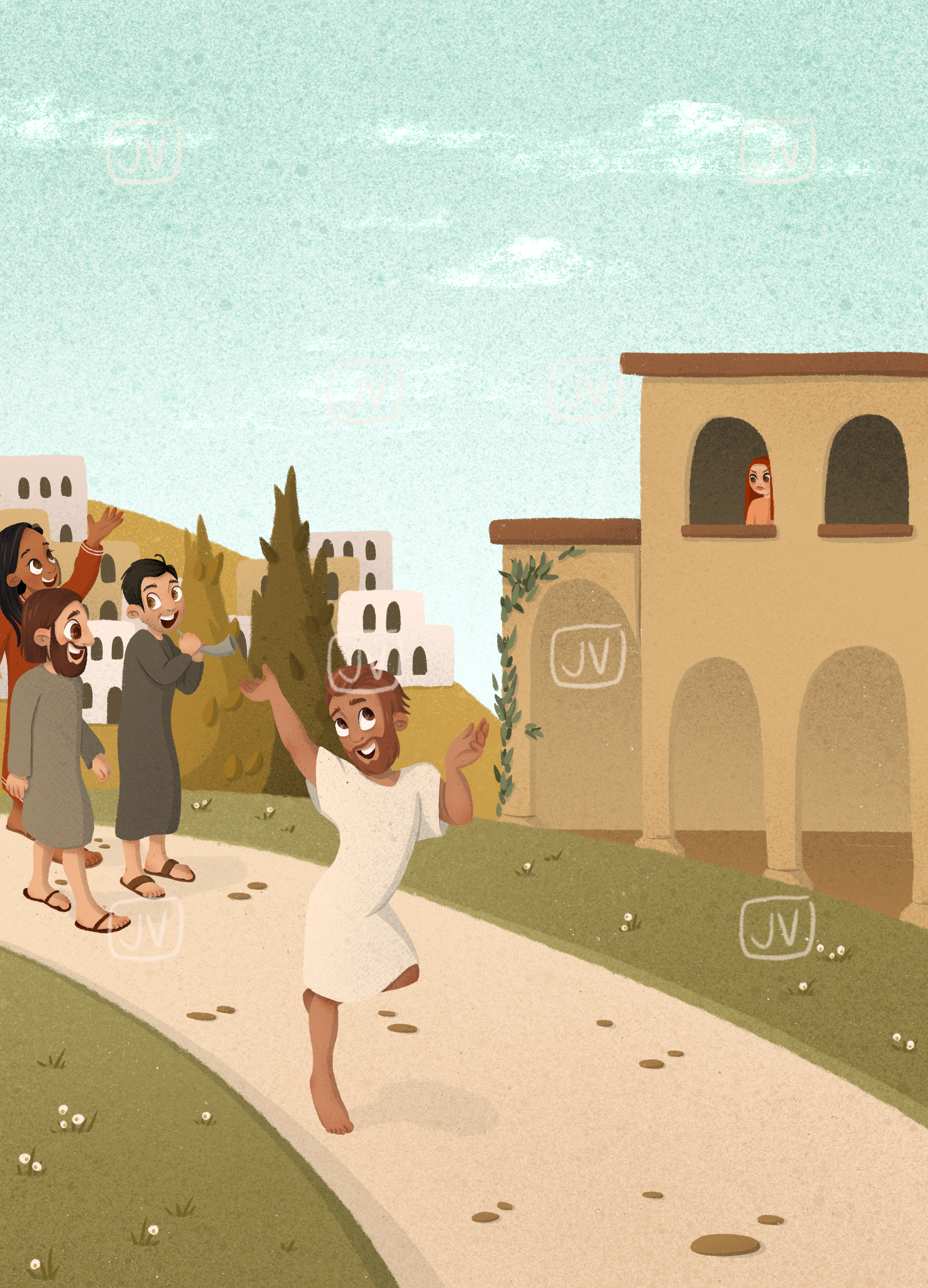
Artist: Jenske Visser

Short Movies
Bible Project - Soul
We explore the Hebrew word "nephesh" that often gets translated as "soul." The English word usually refers to a non-material essence of a human that survives after death, but nephesh means something different. It is referring to humans as living, breathing, physical beings, or just to life itself. Prepare to be surprised at the biblical meaning of this fascinating word.

Songs
Casting Crowns - Here’s my heart
Avalon the Group - Keeper of my heart
Simon Khorolskiy - Oh, the Deep Love of Jesus

Testimonies
Moving Works - I am alive
We all have unfulfilled dreams. For Ritsuko, it was finding fame, love, and acceptance. However, when this dream disappeared, a glimmer of hope arose that not only quenched her feelings of despair, but provided more love and acceptance than she could ever imagine.

Sermons
John Piper - Love Jesus More Than You Love Anything
Do you truly love Jesus? If you did, how would you know? The Bible helps us navigate and even command our own emotions. In twelve minutes, John Piper asks four questions about what it means to love Jesus, and leads us, through the words of Jesus himself, to make Jesus our greatest Treasure.

Classical Commandments
Maimonides
Maimonides (Rabbi Moshe ben Maimon, 12th century) organized all 613 Torah commandments into a structured list. These linked items show where this Law of Messiah commandment overlaps with that classical framework.
Meir of Rothenburg
Rabbi Meir of Rothenburg (13th century, Germany) was a leading Talmudic authority. These reference numbers link this commandment to his halachic rulings.
Source and License
Based on The Law of Messiah - Torah from a New Covenant Perspective by Michael Rudolph and Daniel C. Juster.
License: CC BY-ND 4.0 (Attribution required, NoDerivatives). CC BY-ND 4.0
Disclaimer: the original content is authored by Rabbi Michael Rudolph and Rabbi Daniel Juster; additional notes or implementation details on this website are not part of their original work and do not represent their views.
Record source: The Law of Messiah - Torah from a New Covenant Perspective - Volume 1 & 2
Copyright note: Copyright © Michael Rudolph and Daniel C. Juster, The Law of Messiah, Torah from a New Covenant Perspective, Volume 1 & 2