H4
We are to use our speech, minds, hearts and actions for that which is good and holy.
Category: Godliness, Holiness & Righteousness
Type: Positive
Form: Explicit
Source dataset: Old Testament
Uniqueness: Unique
Classical commandment: No
New Covenant Literal Application
Applies to Person Categories: Everyone
 Jewish
 K'rov Yisrael
 Gentile
More explanation about the icons and New Covenant Literal Application
The New Covenant Literal Application Code (NCLA) is an interpretive guide used by the authors to indicate which person categories a mitzvah applies to, and at what level of literal compliance.
Each card above groups one application level such as mandated or optional. The three people icons show whether that application is meant for Jewish, K'rov Yisrael, or Gentile believers, and the male or female symbols show whether it applies to men, women, or both.
This code reflects the authors' interpretive opinion and is provided for prayerful consideration. The icon view is only a visual summary; the detailed codes and source explanation remain available below for careful study.
Detailed codes: GFm - Gentile female, mandated | GMm - Gentile male, mandated | JFm - Jewish female, mandated | JMm - Jewish male, mandated | KFm - K'rovat Yisrael female, mandated | KMm - K'rov Yisrael male, mandated

Bible references
Key NT Scriptures
- Colossians 3:2-3
- Colossians 3:17
- 1 Corinthians 16:14
- Ephesians 4:29
- Galatians 5:14
- Matthew 5:16
- Matthew 15:18-20
- 1 Peter 1:13
- Philippians 4:8
- Romans 12:2
- Titus 2:7
Key OT Scriptures
- Deuteronomy 6:5
- Exodus 20:1-12
- Isaiah 1:17
- Proverbs 10:11
- Proverbs 12:17
- Psalms 34:2-3
- Psalms 37:3-4
- Psalms 37:27
Supportive NT Scriptures
- Colossians 4:2
- 2 Corinthians 5:9-10
- 2 Corinthians 10:4
- Ephesians 2:10
- Galatians 6:9
- Hebrews 10:24
- Hebrews 13:16
- James 2:14-17
- Luke 10:26-28
- Mark 7:15-23
- Matthew 6:9
- 1 Peter 2:9
- Philippians 2:5
- Romans 2:7
- Romans 10:8-9
- 2 Thessalonians 3:13
- 2 Timothy 3:16-17
- Titus 2:6-7
Supportive OT Scriptures
- Ecclesiastes 7:21-22
- Proverbs 3:27
Bible verses copyright: PUBLIC DOMAIN except in the United Kingdom, where a Crown Copyright applies to printing the KJV. See http://www.cambridge.org/about-us/who-we-are/queens-printers-patent

Commentary
Rabbi Michael Rudolph
This "positive" Mitzvah on "directing our speech, thoughts and actions to that which is good and holy" is a companion to a "negative" Mitzvah that "we are not to wrong one another through our speech." While the compilations of rabbinical commentators list many of the positive and negative elements of this Mitzvah , the weight of Scripture (that we should use every aspect of our being for good) suggests that this Mitzvah be written to combine them. This Mitzvah quotes a goodly number of Scriptures that reference how we are to use (and not use) speech and actions, but I want to also address what might seem (at first) to be opposite, which is holding back on speech, or remaining silent. Proverbs 18:21 says that speech has power, but silence also has power, as we read in Isaiah 53:7 , a prophecy of Yeshua's use of silence in the final hours of his life: He was oppressed and He was afflicted, Yet He opened not His mouth; He was led as a lamb to the slaughter, and as a sheep before its shearers is silent, So He opened not His mouth. Here are some other Scriptures that suggest times when there is wisdom and virtue in being slow to speak or in remaining silent: Exodus 14:14 (NIV): The LORD will fight for you; you need only to be still. Psalm 37:7a : Be still before ADONAI; wait patiently till he comes. Proverbs 11:12 : He who belittles another lacks good sense, whereas a person of discernment stays silent. Proverbs 13:13 : He who guards his mouth preserves his life, but one who talks too much comes to ruin. Proverbs 17:28 : Even a fool, if he stays silent, is thought wise; he who keeps his mouth shut can pass for smart. James 1:19 : Therefore, my dear brothers, let every person be quick to listen but slow to speak, slow to get angry
Classical commentators
Maimonides, Meir, and HaChinuch list mitzvot that include the components of this one, such as their mitzvot to love God (RP3, MP3, C418), not murder (RN289, MN32, C34), and not to steal (RN244, MN34, C224).
Copyright © Michael Rudolph and Daniel C. Juster, The Law of Messiah, Torah from a New Covenant Perspective, Volume 1 & 2

Drawings
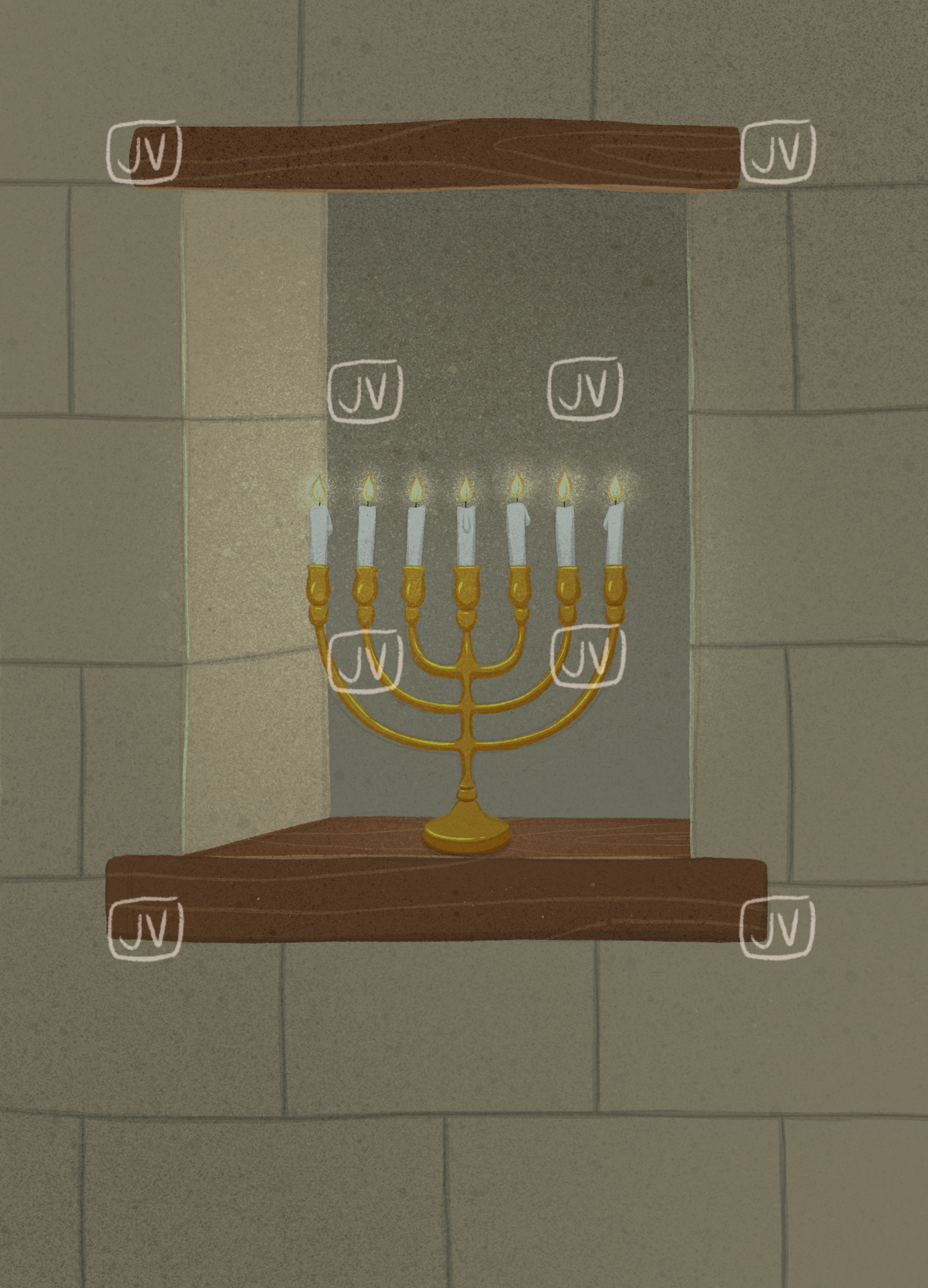
Artist: Jenske Visser

Source and License
Based on The Law of Messiah - Torah from a New Covenant Perspective by Michael Rudolph and Daniel C. Juster.
License: CC BY-ND 4.0 (Attribution required, NoDerivatives). CC BY-ND 4.0
Disclaimer: the original content is authored by Rabbi Michael Rudolph and Rabbi Daniel Juster; additional notes or implementation details on this website are not part of their original work and do not represent their views.
Record source: The Law of Messiah - Torah from a New Covenant Perspective - Volume 1 & 2
Copyright note: Copyright © Michael Rudolph and Daniel C. Juster, The Law of Messiah, Torah from a New Covenant Perspective, Volume 1 & 2