M1
We are to pursue righteousness, i.e. determining what is right and doing it.
Category: Morality & Compassion
Type: Positive
Form: Explicit
Source dataset: Old Testament
Uniqueness: Unique
Classical commandment: No
New Covenant Literal Application
Applies to Person Categories: Everyone
 Jewish
 K'rov Yisrael
 Gentile
More explanation about the icons and New Covenant Literal Application
The New Covenant Literal Application Code (NCLA) is an interpretive guide used by the authors to indicate which person categories a mitzvah applies to, and at what level of literal compliance.
Each card above groups one application level such as mandated or optional. The three people icons show whether that application is meant for Jewish, K'rov Yisrael, or Gentile believers, and the male or female symbols show whether it applies to men, women, or both.
This code reflects the authors' interpretive opinion and is provided for prayerful consideration. The icon view is only a visual summary; the detailed codes and source explanation remain available below for careful study.
Detailed codes: GFm - Gentile female, mandated | GMm - Gentile male, mandated | JFm - Jewish female, mandated | JMm - Jewish male, mandated | KFm - K'rovat Yisrael female, mandated | KMm - K'rov Yisrael male, mandated

Bible references
Key NT Scriptures
- Luke 2:25
- Luke 6:33
- Matthew 5:6
- Matthew 5:10
- Matthew 5:20
- Matthew 6:33
- Matthew 13:43
Key OT Scriptures
- Deuteronomy 6:17-18
- Deuteronomy 6:25
- Deuteronomy 12:28
- Exodus 15:25
- Genesis 6:9
- Genesis 18:19
Bible verses copyright: PUBLIC DOMAIN except in the United Kingdom, where a Crown Copyright applies to printing the KJV. See http://www.cambridge.org/about-us/who-we-are/queens-printers-patent

Commentary
Rabbi Michael Rudolph
Righteousness is the quality of being morally right or justifiable. A righteous man always seeks to do what is right but, if he errs in innocence, he remains righteous because his character in desiring to do right is unchanged. Similarly but opposite, a man of unrighteous character can stumble into doing things that are right from time to time but, if his character is unchanged, he remains unrighteous. This Mitzvah anticipates times when doing the right thing seem risky due to possible adverse consequences that we foresee and fear, or at least would prefer to avoid. At such times of decision we are tempted to disregard what we know is right and, instead, do what seems safest. The foregoing Scriptures call us instead to faith, and to three simple steps: (1) Determine what's right; (2) Do it; (3) Trust God to take care of the consequences. These steps are exemplified by Esther's heroism in Esther 4:7-16 , and are the natural follow-through from 2 Corinthians 5:7 that reminds us: for we live by trust, not by what we see. Or, as the New King James Version translates the Greek: We walk by faith, not by sight. The Bible, beginning to end, describes the righteous character of God, and exhorts us to aspire to be like him - righteous. There are so many Scriptures supporting this Mitzvah that I have elected to save space by printing out the text of those from the Torah and the Gospel books, and only citing the others by chapter and verse.
Classical commentators
This Mitzvah is not addressed by any of the Jewish classical commentators.
Copyright © Michael Rudolph and Daniel C. Juster, The Law of Messiah, Torah from a New Covenant Perspective, Volume 1 & 2

Drawings
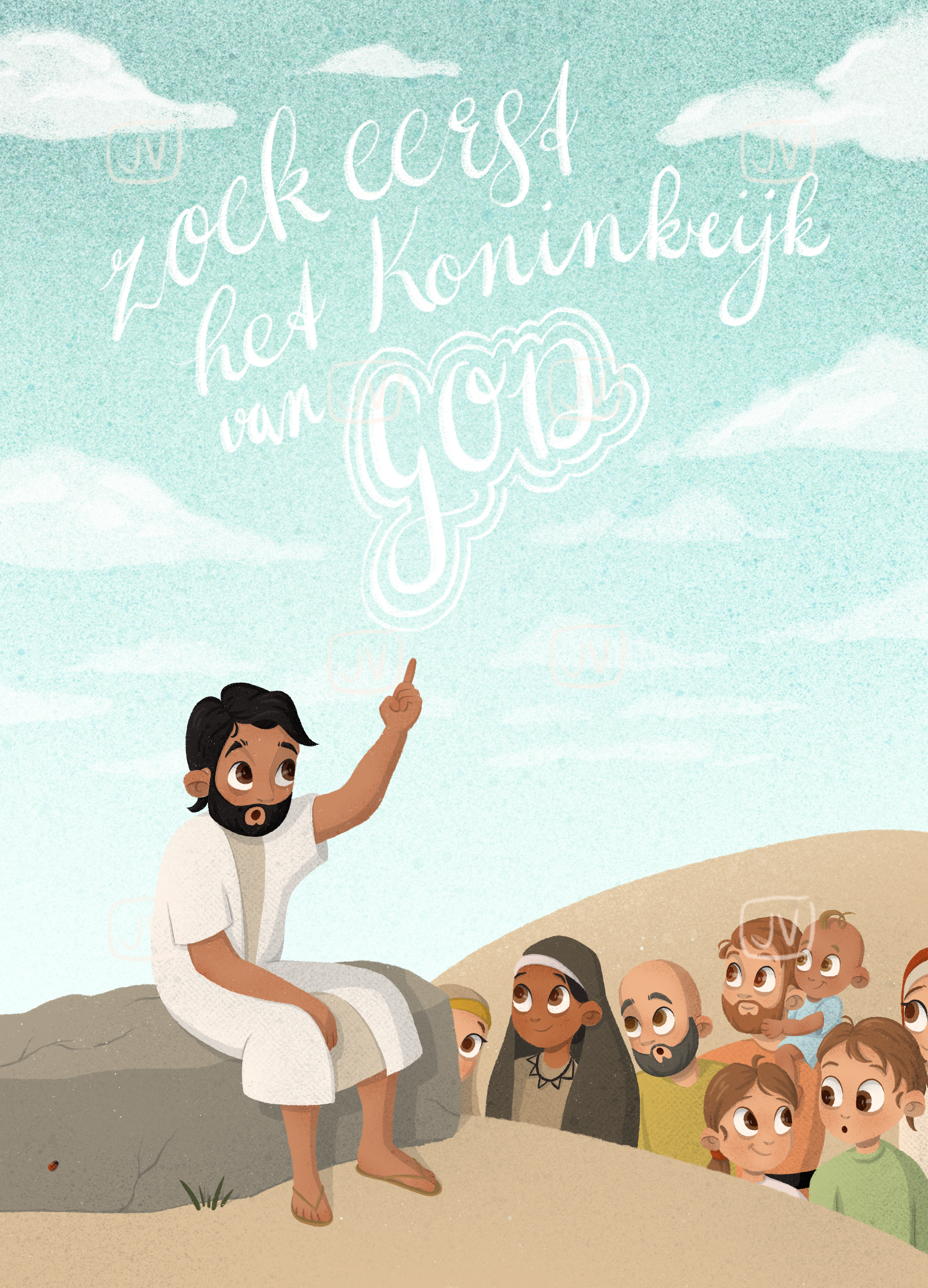
Artist: Jenske Visser

Short Movies
Moving Works - The Mustard Seed
Jesus compared the kingdom of God to one of the smallest seeds on Earth and over 2000 years later, the truth of this teaching can be seen all across the globe.

Songs
Josh Wilson - Borrow
Brandon Lake and Chandler Moore - Fear is not my future

Testimonies
Selah - I look to You
"I was moved to tears upon hearing this song for the first time. The melody is gorgeous, and the lyrics perfectly describe feelings that we all have experienced -- loss, regret, exhaustion, pain. But in the beautiful chorus, the lyrics also point us to the source of our hope in troubled times : "... after all my strength is gone, in You I can be strong...... when melodies are gone, in You I hear a song....". I hope you can hear and sense God's comfort in this beautiful song." -- Allan

Source and License
Based on The Law of Messiah - Torah from a New Covenant Perspective by Michael Rudolph and Daniel C. Juster.
License: CC BY-ND 4.0 (Attribution required, NoDerivatives). CC BY-ND 4.0
Disclaimer: the original content is authored by Rabbi Michael Rudolph and Rabbi Daniel Juster; additional notes or implementation details on this website are not part of their original work and do not represent their views.
Record source: The Law of Messiah - Torah from a New Covenant Perspective - Volume 1 & 2
Copyright note: Copyright © Michael Rudolph and Daniel C. Juster, The Law of Messiah, Torah from a New Covenant Perspective, Volume 1 & 2