J1
We are to apply the Mosaic Law in a manner that is consistent with New Covenant realities.
Category: Justice
Type: Positive
Form: Implied
Source dataset: Old Testament
Uniqueness: Unique
Classical commandment: No
New Covenant Literal Application
Applies to Person Categories: Everyone
 Jewish
 K'rov Yisrael
 Gentile
More explanation about the icons and New Covenant Literal Application
The New Covenant Literal Application Code (NCLA) is an interpretive guide used by the authors to indicate which person categories a mitzvah applies to, and at what level of literal compliance.
Each card above groups one application level such as mandated or optional. The three people icons show whether that application is meant for Jewish, K'rov Yisrael, or Gentile believers, and the male or female symbols show whether it applies to men, women, or both.
This code reflects the authors' interpretive opinion and is provided for prayerful consideration. The icon view is only a visual summary; the detailed codes and source explanation remain available below for careful study.
Detailed codes: GFm - Gentile female, mandated | GMm - Gentile male, mandated | JFm - Jewish female, mandated | JMm - Jewish male, mandated | KFm - K'rovat Yisrael female, mandated | KMm - K'rov Yisrael male, mandated

Bible references
Key NT Scriptures
- Galatians 3:19-25
- Hebrews 7:14-22
- Hebrews 8:6-13
- Hebrews 10:1
- Matthew 5:17-20
- Matthew 22:36-40
- Romans 2:13-16
- Romans 3:19-23
- Romans 7:6-7
- Romans 8:1-5
- 2 Timothy 3:16-17
Key OT Scriptures
- Jeremiah 31:30-33
Bible verses copyright: PUBLIC DOMAIN except in the United Kingdom, where a Crown Copyright applies to printing the KJV. See http://www.cambridge.org/about-us/who-we-are/queens-printers-patent

Commentary
Rabbi Michael Rudolph
This Mitzvah was written to explain God's expectation of us in the New Covenant, and how to apply His commandments today that were given under the Mosaic Covenant. Although many Mosaic commandments are impossible or imprudent to comply with literally today, 2 Timothy 3:16 assures us that all of them are valuable in some way: All Scripture is God-breathed and is valuable for teaching the truth, convicting of sin, correcting faults and training in right living The reason that some of the commandments given under Moses cannot be complied with today is that they were constructed for a covenant that has been replaced (or has almost been replaced) by a New Covenant that is very different: Jeremiah 31:30-31(31-32) "' Here, the days are coming,' says ADONAI, 'when I will make a new covenant with the house of Isra'el and with the house of Y'hudah. It will not be like the covenant I made with their fathers on the day I took them by their hand and brought them out of the land of Egypt; because they, for their part, violated my covenant, even though I, for my part, was a husband to them,' says ADONAI. " Hebrews 8:13 By using the term, "new", he has made the first covenant "old"; and something being made old, something in the process of aging, is on its way to vanishing altogether. Today's conditions are changed. We no longer have the Tabernacle or Temple, there is no longer a functioning Levitical priesthood or Levitical High Priest and, even if we rebuilt the Temple and reinstalled Levitical priests, most of the sacrifices required by the Mosaic Law would be unauthorized because Yeshua is now our sacrifice for sin and our High Priest: Hebrews 10:10-13 It is in connection with this will that we have been separated for God and made holy, once and for all, through the offering of Yeshua the Messiah's body. Now every cohen stands every day doing his service, offering over and over the same sacrifices, which can never take away sins. But this one, after he had offered for all time a single sacrifice for sins, sat down at the right hand of God, from then on to wait until his enemies be made a footstool for his feet. Hebrews 4:14 Therefore, since we have a great cohen gadol who has passed through to the highest heaven, Yeshua, the Son of God, let us hold firmly to what we acknowledge as true. Hebrews 7:17-27 For it is stated, "You are a cohen FOREVER, to be compared with Malki-Tzedek." Thus, on the one hand, the earlier rule is set aside because of its weakness and inefficacy (for the Torah did not bring anything to the goal); and, on the other hand, a hope of something better is introduced, through which we are drawing near to God. What is more, God swore an oath. For no oath was sworn in connection with those who become cohanim now; but Yeshua became a cohen by the oath which God swore when he said to him, "ADONAI has sworn and will not change his mind, 'You are a cohen forever.'" Also this shows how much better is the covenant of which Yeshua has become guarantor. Moreover, the present cohanim are many in number, because they are prevented by death from continuing in office. But because he lives forever, his position as cohen does not pass on to someone else; and consequently, he is totally able to deliver those who approach God through him; since he is alive forever and thus forever able to intercede on their behalf. This is the kind of cohen gadol that meets our need - holy, without evil, without stain, set apart from sinners and raised higher than the heavens; one who does not have the daily necessity, like the other cohanim g'dolim, of offering up sacrifices first for their own sins and only then for those of the people; because he offered one sacrifice, once and for all, by offering up himself. Attempting to apply statutory laws in a literal way when the result is improper or does not make sense is what is called "legalism", and it is warned against in Scripture: Romans 6:14-15 For sin will not have authority over you; because you are not under legalism but under grace. Therefore, what conclusion should we reach? "Let's go on sinning, because we're not under legalism but under grace"? Heaven forbid! Galatians 3:10-12 For everyone who depends on legalistic observance of Torah commands lives under a curse, since it is written, 'Cursed is everyone who does not keep on doing everything written in the Scroll of the Torah.' Now it is evident that no one comes to be declared righteous by God through legalism, since 'The person who is righteous will attain life by trusting and being faithful.' Furthermore, legalism is not based on trusting and being faithful, but on [a misuse of] the text that says, 'Anyone who does these things will attain life through them.' So, the question remains: How do we apply the Scriptural commandments of the Torah that seem undoable today? The answer is different for every commandment and for every situation in which we find ourselves, and the New Covenant Scriptures tells us how; it is to consult and be led by the Holy Spirit: John 14:26 But the Counselor, the Ruach HaKodesh, whom the Father will send in my name, will teach you everything; that is, he will remind you of everything I have said to you. Romans 7:6 But now we have been released from this aspect of the Torah, because we have died to that which had us in its clutches, so that we are serving in the new way provided by the Spirit and not in the old way of outwardly following the letter of the law. Romans 8:1-2 Therefore, there is no longer any condemnation awaiting those who are in union with the Messiah Yeshua. Why? Because the Torah of the Spirit, which produces this life in union with Messiah Yeshua, has set me free from the "Torah" of sin and death. Romans 8:14 All who are led by God's Spirit are God's sons. Notwithstanding the importance of being led by the Spirit, it is sometimes helpful to group literally undoable commandments by subject category and consider their significance and application collectively. What follows is a list of such subject categories along with suggested applications, and one or two Scripture examples for each: Scripture Catagories Scriptures that Require the Holy Tabernacle, Temple, or Place that God Chooses Scriptures that Assume an Operative Levitical Priesthood Scriptures that Call for Punishment Scriptures that Pertain to the Government of Ancient Israel Scriptures that Pertain to the Land of Ancient Israel Scriptures that Pertain to Specific Wars Scriptures that Pertain to Sacrificing Animals Scriptures that Pertain to Bloodless Offerings Scriptures that Pertain to Holy Places & Things Scriptures that Pertain to Consecrations, Dedications & Redemptions Scriptures that Pertain to Ritual Purity Scriptures that Pertain to Health & Sanitation Scriptures that Pertain to Slavery & Indenture Scriptures that Pertain to Sh'mitah & the Jubilee Scriptures that Pertain to Criminal Justice Scriptures that Pertain to Civil Justice Scriptures that Pertain to Mosaic Jurisprudence Scriptures that Pertain to Idols & Idolatry Scriptures that Pertain to Family Matters Scriptures that Require the Holy Tabernacle, Temple, or Other Place that God Chooses Exodus 25:8 They are to make me a sanctuary, so that I may live among them. Deuteronomy 12:21 If the place which ADONAI your God chooses to place his name is too far away from you; then you are to slaughter animals from your cattle or sheep, which ADONAI has given you; and eat on your own property, as much as you want. The Holy Tabernacle, the Temple, and other special places designated by God were not only places in which to conduct sacrifices, but also where the glory of God dwelt on earth, and where men (who were authorized) could encounter God intimately and powerfully. Chapters 40 to 48 of Ezekiel prophesy the detailed rebuilding of a Temple that is mysterious as to its identity, function, and when it is to happen (or has happened). Some scholars believe that the passage is a commandment for the Jewish people to rebuild God's Temple. Most significant, however, is that the place where God chooses to place his name is a foreshadowing of the New Covenant's visitation of the Holy Spirit who has come to live within all men that are willing to receive Him: 1 Corinthians 6:19a Or don't you know that your body is a temple for the Ruach HaKodesh who lives inside you, whom you received from God? Also, 1 Corinthians 3:16 shows that the corporate body of Messiah is also a Temple of the Spirit today: Don't you know that you people are God's temple and that God's Spirit lives in you? This is anticipated by John 4:23-24 where worship in spirit and in truth transcends a particular temple location: But the time is coming - indeed, it's here now - when the true worshippers will worship the Father spiritually and truly, for these are the kind of people the Father wants worshipping him. God is spirit; and worshippers must worship him spiritually and truly. Scripture Catagories Scriptures that Assume an Operative Levitical Priesthood Leviticus 8:1-4 ADONAI said to Moshe, 'Take Aharon and his sons with him, the garments, the anointing oil, the bull for the sin offering, the two rams and the basket of matzah; and assemble the entire community at the entrance to the tent of meeting.' Moshe did as ADONAI ordered him, and the community was assembled at the entrance to the tent of meeting. The above Scripture speaks of the ordination of Aaron and his sons as Levitical priests, and Aaron as High Priest. A significant value of the Scriptures concerning Levitical priests, is that they teach us what the functions of a priest and priesthood should be and, although the Levitical priesthood is no longer operative, other priesthoods are. The people of Israel are said, in Scripture, to be a kingdom of priests ( Exodus 19:6 ). Also, 1 Peter 2:4-5 defines a priesthood of believers in Yeshua, and Hebrews 4:14-16 establishes Yeshua as the New Covenant's High Priest. God has New Covenant priestly expectations of Israelites (today referred to as Jews) and of all believers in Yeshua - not to conduct sacrifices - but to prayerfully intercede for others, teach, counsel, and otherwise serve our fellow man. Scripture Catagories Scriptures that Call for Punishment Exodus 22:2b-3(3b-4) A thief must make restitution; so if he has nothing, he himself is to be sold to make good the loss from the theft. If what he stole is found alive in his possession, he is to pay double, no matter whether it is an ox, a donkey or a sheep. Exodus 31:13-15 Tell the people of Isra'el, 'You are to observe my Shabbats; for this is a sign between me and you through all your generations; so that you will know# that I am ADONAI, who sets you apart for me. Therefore you are to keep my Shabbat, because it is set apart for you. Everyone who treats it as ordinary must be put to death; for whoever does any work on it is to be cut off from his people. On six days work will get done; but the seventh day is Shabbat, for complete rest, set apart for ADONAI. Whoever does any work on the day of Shabbat must be put to death. Leviticus 24:19-20 If someone injures his neighbor, what he did is to be done to him - break for break, eye for eye, tooth for tooth - whatever injury he has caused the other person is to be rendered to him in return. Deuteronomy 21:18-21 If a man has a stubborn, rebellious son who will not obey what his father or mother says, and even after they discipline him he still refuses to pay attention to them; then his father and mother are to take hold of him and bring him out to the leaders of his town, at the gate of that place, and say to the leaders of his town, 'This son of ours is stubborn and rebellious, he doesn't pay attention to us, lives wildly, gets drunk.' Then all the men of his town are to stone him to death; in this way you will put an end to such wickedness among you, and all Isra'el will hear about it and be afraid. Leviticus 24:19-20 declares that "eye for eye, tooth for tooth" is the Mosaic standard of punishment for causing personal injury to another. Expanding the principle to other kinds of infractions, one is reminded of a quote from W.S. Gilbert's The Mikado : "Let the punishment fit the crime." Sensible as these standards for punishment may seem, they are rarely employed by today's secular governments that tend to not allow creative discretion to judges. The Scriptures requiring execution and other extreme punishments of those who violate certain biblical commandments are often shocking because, by today's standards, many of the offenses that called for death and other severe punishments during the time of Moses are not even considered crimes today. We no longer stone our rebellious and drunkard sons, nor do we put to death those who violate the Sabbath and, should we attempt to do so, we would be in violation of the laws of the secular governments under which we live. During the time of Moses, the Israelites lived under a theocracy that was governed directly by God and today, we do not. Torah for us today, is ancient law that we read about in the Bible in order to understand its principles. For the Israelites under Moses, however, it was contemporary law that was spoken by God directly to them from Mount Sinai. For the Israelites to disobey that which God commanded them in so personal a way would have been a direct "slap in the face" of God, and worthy of the severe punishments that we read about. There are also offenses in the Torah for which punishments are not severe by today's standards, but which, nevertheless, cannot be applied without transgressing today's secular laws. For example, Exodus 22:2b-3(3b-4) directs that a thief must pay double restitution for what he has stolen, and he must be sold as a laborer (a slave) if he cannot afford to pay. On the surface, double restitution seems fair and doable, but it is not enforceable because the secular laws under which we live do not allow for it, and slave labor is, of course, a violation of the secular law. For us, the main value of the various punishments we read about in the Scriptures is that they give us an understanding of the seriousness with which God considers certain kinds of wrongful conduct. In today's world, capital punishment of a rebellious son would not be allowed. Yet, God considers rebellion and stubbornness so serious a sin that we read in 1 Samuel 15:23 : For rebellion is like the sin of sorcery, stubbornness like the crime of idolatry. Because you have rejected the word of ADONAI, he too has rejected you as king. It is also of interest to note that, except for captives in war, nothing in the Mosaic Law authorizes imprisonment as a punishment; yet, imprisonment is the principle form of punishment employed by secular governments today. Really, imprisonment as a punishment is a blunt instrument because it does not promote heart-felt repentance. For non-capital offenses, restoration through community service and paying back offended persons (and then some) is much more redemptive. What is more, being imprisoned with other offenders often brings greater criminality that is acted out upon the prisoner's release - the opposite of that which is intended. Societies should take this into account in constructing their systems of law. Scripture Catagories Scriptures that Pertain to the Government of Ancient Israel Exodus 30:13-14 Everyone subject to the census is to pay as an offering to ADONAI half a shekel [one-fifth of an ounce of silver] - by the standard of the sanctuary shekel (a shekel equals twenty gerahs). Everyone over twenty years of age who is subject to the census is to give this offering to ADONAI Deuteronomy 1:17 You are not to show favoritism when judging, but give equal attention to the small and to the great. No matter how a person presents himself, don't be afraid of him; because the decision is God's. The case that is too hard for you, bring to me and I will hear it. The Scriptures quoted could be complied with if one were a citizen of Israel under Moses, but could not (and cannot) be complied with under other governments. Still, they have teaching value. For example, the Exodus Scripture teaches us that there is a government's need to know how many residents occupy its country, and the Deuteronomy Scripture establishes standards for judging legal cases, except that today, cases that are removed from a lower court are sent to a higher court - not to Moses.
Rabbi Daniel Juster
Romans 7 makes it clear that we are in the New Covenant Order and not the Mosaic when it refers to the widow and indicates that she is now freed from her covenant bond. That would not have been the case were we still under the Mosaic Covenant. We who are believers have died and been raised in the Messiah and, although we have been released from the Mosaic Covenant, we are, nevertheless, expected to apply its teaching in a manner that is applicable in the New Covenant. Contrary to the idea of secular society, the Bible enjoins all nations to acknowledge God and to embrace the principles of God's Law for the governing of the society. In classical Protestant thought first defined by John Calvin, this was called the second use of the Law. God's Law (both Mosaic and New Covenant) provides the framework for society's civil law, so followers of Yeshua should work toward bringing their civil society into conformity with its principles. The ideal of all nations acknowledging the Lordship of God and His Law is repeated throughout the Prophets and the Writings.
Classical commentators
The 613 mitzvot listed by Maimonides and HaChinuch include several that cannot be literally complied with today. Meir's compilation leaves out many of them, which is why his compilation lists fewer. None of the classical Jewish commentators recognize the existence of a New Covenant, and their interpretations of the Torah Scriptures reflect that view.
Copyright © Michael Rudolph and Daniel C. Juster, The Law of Messiah, Torah from a New Covenant Perspective, Volume 1 & 2

Drawings
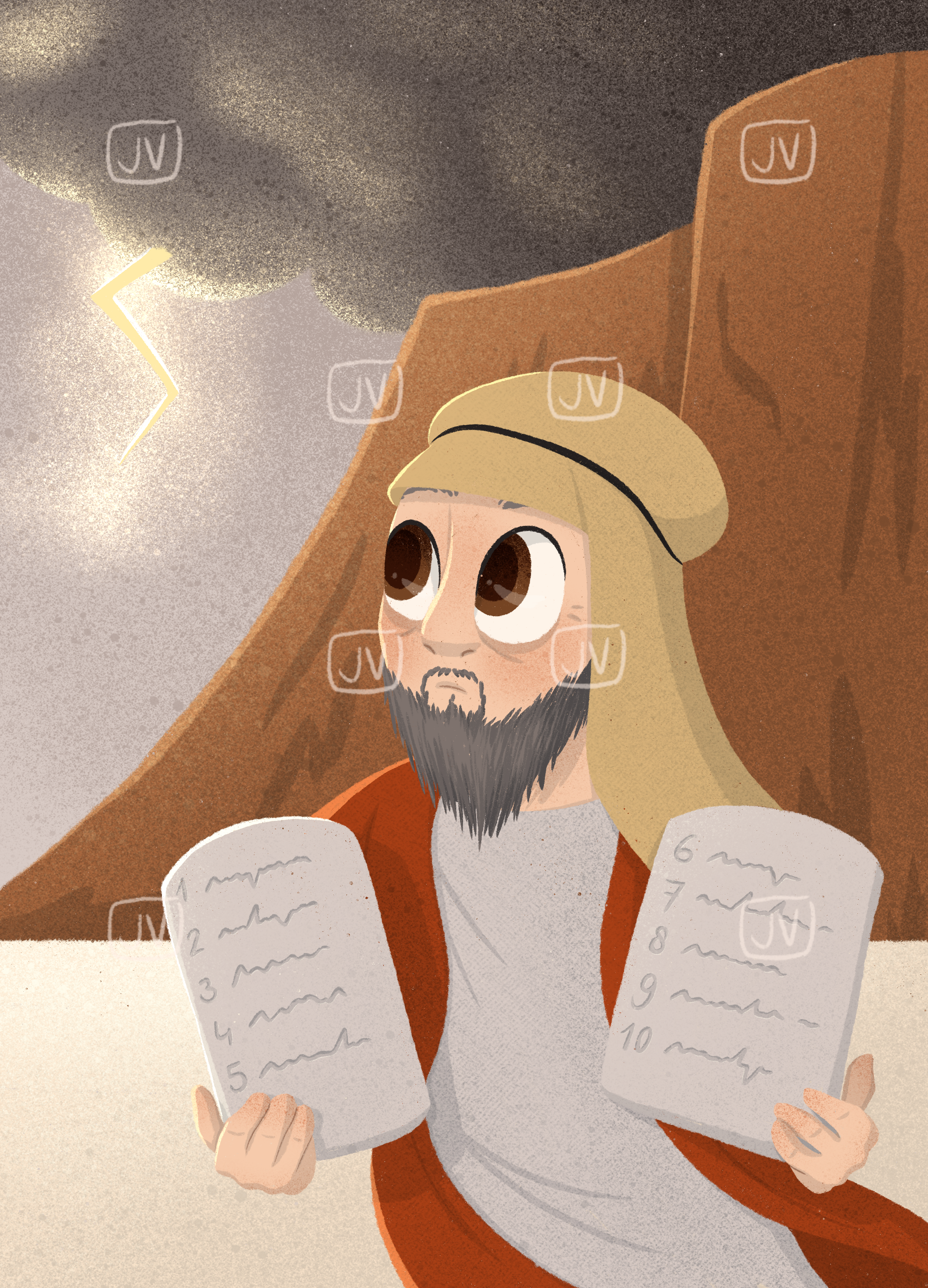
Artist: Jenske Visser

Source and License
Based on The Law of Messiah - Torah from a New Covenant Perspective by Michael Rudolph and Daniel C. Juster.
License: CC BY-ND 4.0 (Attribution required, NoDerivatives). CC BY-ND 4.0
Disclaimer: the original content is authored by Rabbi Michael Rudolph and Rabbi Daniel Juster; additional notes or implementation details on this website are not part of their original work and do not represent their views.
Record source: The Law of Messiah - Torah from a New Covenant Perspective - Volume 1 & 2
Copyright note: Copyright © Michael Rudolph and Daniel C. Juster, The Law of Messiah, Torah from a New Covenant Perspective, Volume 1 & 2