H3
We are to preserve and not destroy things that belong to God and that are holy.
Category: Godliness, Holiness & Righteousness
Type: Positive & Negative
Form: Implied
Source dataset: Old Testament
Uniqueness: Not unique
Classical commandment: Yes
New Covenant Literal Application
Applies to Person Categories: Everyone
 Jewish
 K'rov Yisrael
 Gentile
More explanation about the icons and New Covenant Literal Application
The New Covenant Literal Application Code (NCLA) is an interpretive guide used by the authors to indicate which person categories a mitzvah applies to, and at what level of literal compliance.
Each card above groups one application level such as mandated or optional. The three people icons show whether that application is meant for Jewish, K'rov Yisrael, or Gentile believers, and the male or female symbols show whether it applies to men, women, or both.
This code reflects the authors' interpretive opinion and is provided for prayerful consideration. The icon view is only a visual summary; the detailed codes and source explanation remain available below for careful study.
Detailed codes: GFr - Gentile female, recommended | GMr - Gentile male, recommended | JFm - Jewish female, mandated | JMm - Jewish male, mandated | KFm - K'rovat Yisrael female, mandated | KMm - K'rov Yisrael male, mandated

Bible references
Key NT Scriptures
- John 2:13-16
- Revelation 22:18-19
- Romans 3:1-2
- 2 Timothy 1:14
Key OT Scriptures
- Deuteronomy 12:2-4
- Deuteronomy 20:19-20
Bible verses copyright: PUBLIC DOMAIN except in the United Kingdom, where a Crown Copyright applies to printing the KJV. See http://www.cambridge.org/about-us/who-we-are/queens-printers-patent

Commentary
Rabbi Michael Rudolph
This Mitzvah brings together two Scriptures that, at first glance, have little in common. Deuteronomy 12:2-4 commands the Israelites to destroy all the places and objects used for idol-worship that they find among the heathen nations they are dispossessing; however, if in the process of doing so they come across places of worship and things belonging to HaShem - those they must not destroy. Eight chapters later, Deuteronomy 20:19-20 forbids the Israelites from destroying fruit trees while laying siege to a city. The connection between these seemingly unrelated Scriptures is the attribute of "holiness" as applied to the trees. God indeed wants places where idolatry is practiced and implements used there to be destroyed, but He does not want His holy places and things - things that belong to Him or that He provides as a blessing for men (like the fruit trees) to be destroyed in the process. Even when they have fallen into the hands of an enemy - holy things of God retain their holiness and must not be destroyed. Ephesians 4:29 illustrates this Mitzvah in a less tangible form: Let no harmful language come from your mouth, only good words that are helpful in meeting the need, words that will benefit those who hear them. Here the holy possession of God that we must not harm or destroy is our neighbor. The Scripture warns us that our words can be harmful to those who hear them, so we must speak only good and helpful words in order to not bring destruction to our neighbor who is God's holy creation. Jewish halachah and tradition have long recognized the principle of preserving, and not destroying, things that belong to God and that are holy. An example is that we do not "trash" or tear up old Bibles, Torah scrolls or siddurim . Instead, there is a procedure whereby we ceremonially bury them in a way that is analogous to the way we bury a deceased person. 1 . I am also reminded of the way in which Leviticus 19:23-24 commands our holy respect for fruit-bearing trees. We do not eat their fruit during the first three years of their planting; the fourth year fruit is considered holy, and all of it must be used for praising God. It is only from the fifth year on that we may eat the fruit with an expectation of receiving its blessing year after year. Consider also, our "practical" respect for trees in Israel where we seek to plant them and not destroy them (e.g. Tu B'shvat ). By contrast, the Israel Defense Forces came under severe criticism for destroying olive trees in the process of clearing land for Israeli settlements. This Mitzvah is mandated for both Jews and K'rovei Yisrael , and is highly recommended for believing Gentiles as well. The particulars of how to accomplish it need prayer - especially in these modern times when text that includes God's Name can be deleted from a computer or from cyberspace at the touch of a button. 1. In Orthodox Jewish practice the list is greater, and includes such things as tfilin
Classical commentators
Maimonides, Meir, and HaChinuch treat this Mitzvah as two distinct mitzvot as follows: Regarding Deuteronomy 12:3-4 : All three commentators generalize the circumstances alluded to in this Scripture to include anything that is overtly holy (including one of the seven Names of God) and anything that is generally useful. Meir would carry this even to the point of not melting down a piece of metal upon which has been written one of God's Names. HaChinuch emphasizes that we must not erase any holy writing, or destroy a temple or altar established for the worship of God. Both he and Maimonides state that if Scripture is written down by an Israelite, it must not be erased or destroyed. If it is written by an heretical Israelite, it is not holy and must be destroyed (even if it contains God's Name) because the heretic did not believe in the holiness of the Name when he wrote it. HaChinuch says that if it is written by a heathen, it should not be destroyed, but rather hidden and stored out of sight. Maimonides agrees with Meir and HaChinuch, that we must not break down houses where the Lord is worshiped. Regarding Deuteronomy 20:19 : All three commentators interpret this Scripture broadly to include destruction of all kinds. Maimonides and Meir first deal with the Scripture literally as prohibiting our destroying fruit trees in the process of setting siege to a town, and Maimonides adds: "in order to cause distress." 2 Meir goes on to say that we must not cut down any fruit tree destructively, nor break a useful object, nor tear a garment, nor ruin food, nor demolish a sound structure. HaChinuch states that we must not destroy fruit trees in order to cause damage or loss, nor should we needlessly set fires, tear clothing, or break vessels. He says that the reason for these restrictions is in order to fulfill the mitzvah of loving others (presumably he means our enemies), and to bring out the love that is inherent in godly people. We are to love that which is good and beneficial, be saddened when a valuable thing is broken or destroyed, and never destroy anything in anger. 2. See also, Mishneh Torah, Shoftim, Hilchot Melachim VI, 10 .
Copyright © Michael Rudolph and Daniel C. Juster, The Law of Messiah, Torah from a New Covenant Perspective, Volume 1 & 2

Drawings
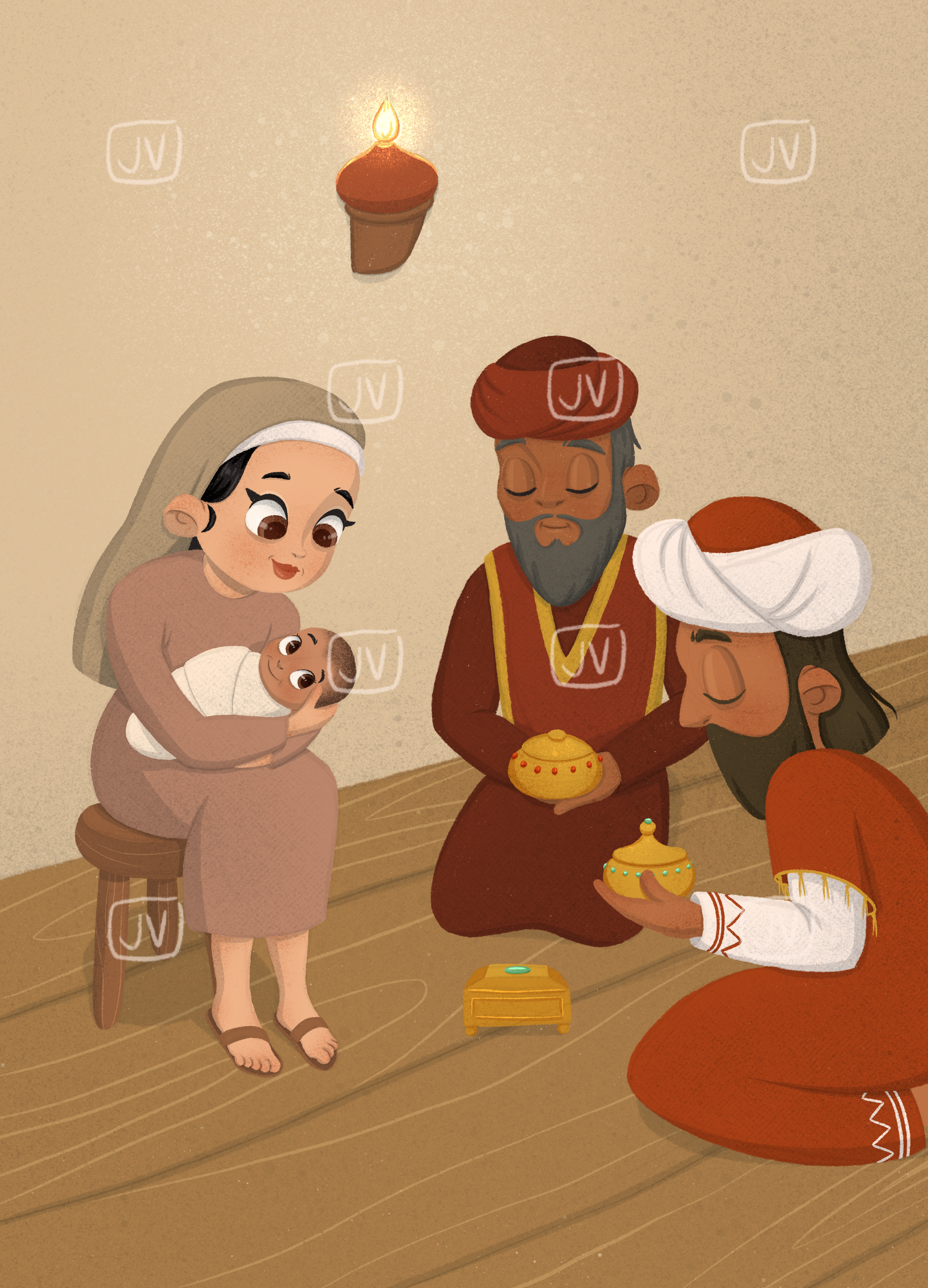
Artist: Jenske Visser

Classical Commandments
Maimonides
Maimonides (Rabbi Moshe ben Maimon, 12th century) organized all 613 Torah commandments into a structured list. These linked items show where this Law of Messiah commandment overlaps with that classical framework.
Meir of Rothenburg
Rabbi Meir of Rothenburg (13th century, Germany) was a leading Talmudic authority. These reference numbers link this commandment to his halachic rulings.
Source and License
Based on The Law of Messiah - Torah from a New Covenant Perspective by Michael Rudolph and Daniel C. Juster.
License: CC BY-ND 4.0 (Attribution required, NoDerivatives). CC BY-ND 4.0
Disclaimer: the original content is authored by Rabbi Michael Rudolph and Rabbi Daniel Juster; additional notes or implementation details on this website are not part of their original work and do not represent their views.
Record source: The Law of Messiah - Torah from a New Covenant Perspective - Volume 1 & 2
Copyright note: Copyright © Michael Rudolph and Daniel C. Juster, The Law of Messiah, Torah from a New Covenant Perspective, Volume 1 & 2