G7
We are to treat God as holy by proclaiming Him holy, by being holy and by not profaning His Name.
Category: God & Yeshua
Type: Positive & Negative
Form: Explicit
Source dataset: Old Testament
Uniqueness: Not unique
Classical commandment: Yes
New Covenant Literal Application
Applies to Person Categories: Everyone
 Jewish
 K'rov Yisrael
 Gentile
More explanation about the icons and New Covenant Literal Application
The New Covenant Literal Application Code (NCLA) is an interpretive guide used by the authors to indicate which person categories a mitzvah applies to, and at what level of literal compliance.
Each card above groups one application level such as mandated or optional. The three people icons show whether that application is meant for Jewish, K'rov Yisrael, or Gentile believers, and the male or female symbols show whether it applies to men, women, or both.
This code reflects the authors' interpretive opinion and is provided for prayerful consideration. The icon view is only a visual summary; the detailed codes and source explanation remain available below for careful study.
Detailed codes: GFm - Gentile female, mandated | GMm - Gentile male, mandated | JFm - Jewish female, mandated | JMm - Jewish male, mandated | KFm - K'rovat Yisrael female, mandated | KMm - K'rov Yisrael male, mandated

Bible references
Key NT Scriptures
-
Luke 11:2
-
Matthew 6:9
-
Matthew 12:31-32
Key OT Scriptures
-
Exodus 20:7
-
Exodus 22:27
-
Leviticus 11:44-45
-
Leviticus 18:21
-
Leviticus 19:2
-
Leviticus 19:12
-
Leviticus 22:32-33
-
Leviticus 24:10-16
Supportive NT Scriptures
-
1 Peter 1:15-16
-
Revelation 4:8
-
Revelation 15:4
Supportive OT Scriptures
-
Isaiah 6:1-3
-
Psalms 99:9
Bible verses copyright: PUBLIC DOMAIN except in the United Kingdom, where a Crown Copyright applies to printing the KJV. See http://www.cambridge.org/about-us/who-we-are/queens-printers-patent

Commentary
Rabbi Michael Rudolph
This Mitzvah re-formulates two of the traditional taryag mitzvot into a mitzvah having three components. The traditional mitzvot direct us to (1) sanctify God's Name, and (2) not profane God's Name. The components of this re-formulated mitzvah direct us to (1) treat God as holy, (2) proclaim God's holiness, and (3) not profane God's Name. There is logic to linking them in this way. God proclaims His own holiness, and requires that we acknowledge it by being obedient to these three directives. God's holiness encompasses His entire nature that includes His integrity, purity, trustworthiness, goodness, righteousness, justice, compassion, love, and all His other attributes. There are other ways (in addition to these three) of acknowledging God's holiness, but the key to them all is holding God holy in our hearts and thoughts and reminding ourselves of it regularly. That is the purpose of the third benediction of the Amidah and of the Kedushah - prayers that are a part of most synagogue services. The third benediction of the Amidah states: 1 You are holy and Your Name is holy, and holy ones praise You every day, forever. Blessed are You, Hashem, the Holy God. And the Kedushah (quoting Isaiah 6:3 ) states: 2 We shall sanctify Your Name in this world, just as they sanctify It in heaven above, as it is written by Your prophet, "And one [angel] will call to another and say: 'Holy, holy, holy is Hashem, Master of Legions, the whole world is filled with His glory.' And it ends with 3 From generation to generation we shall relate Your greatness and for infinite eternities we shall proclaim Your holiness. Your praise, our God, shall not leave our mouth forever and ever, for You O God, are a great and holy King. Blessed are You Hashem, the holy God. 1. Translation: The ArtScroll Siddur , Third Edition, (Brooklyn, New York: Mesorah Publications, Ltd., Sept. 2006). 2. Ibid. 3. Ibid.
Classical commentators
Maimonides', Meir's, and HaChinuch's positive mitzvot RP9, MP5, and C296, respectively, all draw, from Leviticus 22:32 , the commandment that we are to sanctify God (or God's Name). Their negative mitzvot RN63, MN155, and C295, respectively, draw from the same Scripture, the commandment that we are not to profane (or desecrate) God's Name. All three commentators say, of their positive mitzvot , that we are to proclaim God to the world and never deny Him - even at the risk of injury or death. We are also to refrain from committing sin (especially sins connected to idolatry), since sin dishonors God and, by inference, denies His holiness.
Copyright © Michael Rudolph and Daniel C. Juster, The Law of Messiah, Torah from a New Covenant Perspective, Volume 1 & 2

Drawings
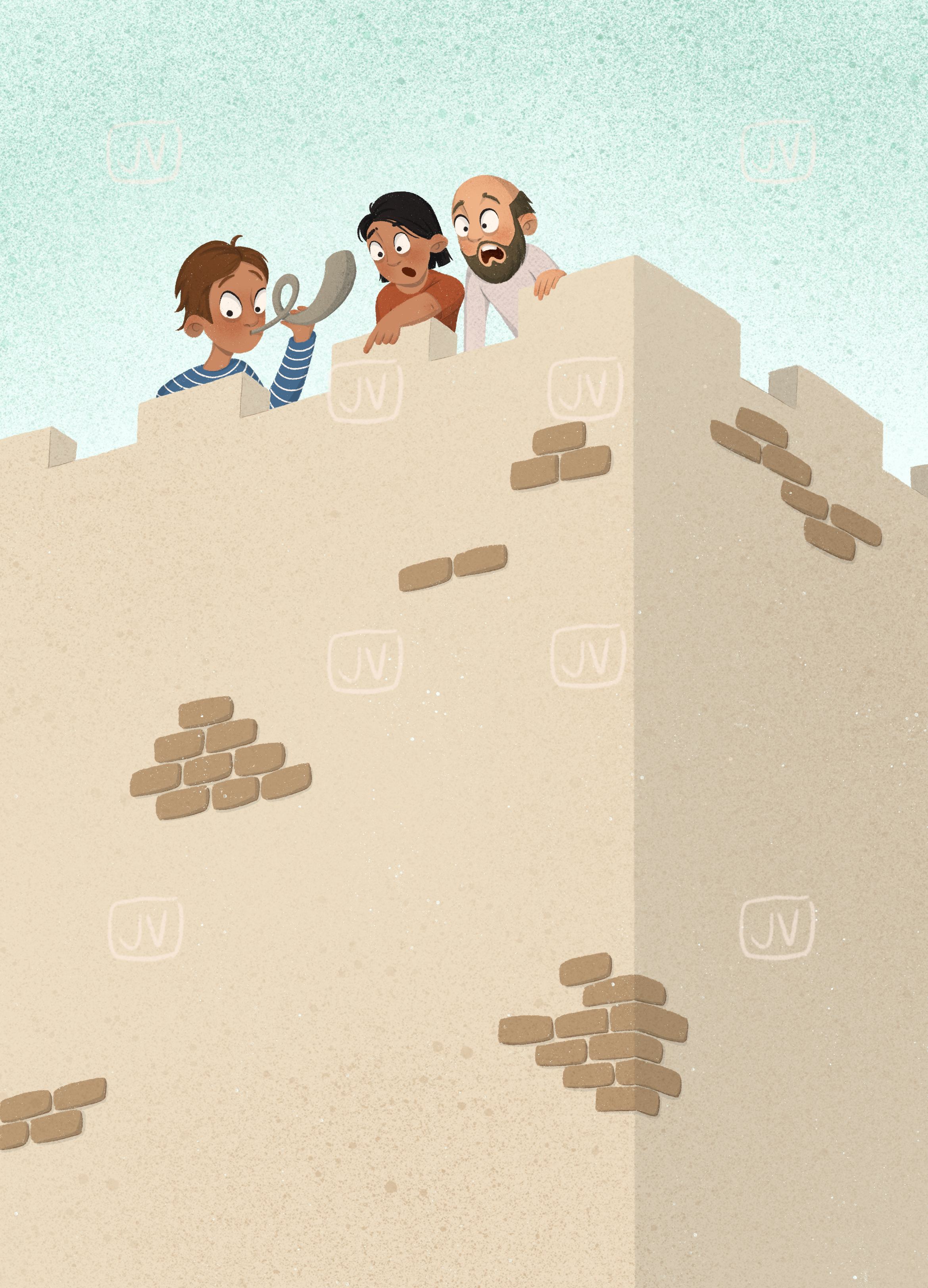
Artist: Jenske Visser

Classical Commandments
Maimonides
Maimonides (Rabbi Moshe ben Maimon, 12th century) organized all 613 Torah commandments into a structured list. These linked items show where this Law of Messiah commandment overlaps with that classical framework.
Meir of Rothenburg
Rabbi Meir of Rothenburg (13th century, Germany) was a leading Talmudic authority. These reference numbers link this commandment to his halachic rulings.
Source and License
Based on The Law of Messiah - Torah from a New Covenant Perspective by Michael Rudolph and Daniel C. Juster.
License: CC BY-ND 4.0 (Attribution required, NoDerivatives). CC BY-ND 4.0
Disclaimer: the original content is authored by Rabbi Michael Rudolph and Rabbi Daniel Juster; additional notes or implementation details on this website are not part of their original work and do not represent their views.
Record source: The Law of Messiah - Torah from a New Covenant Perspective - Volume 1 & 2
Copyright note: Copyright © Michael Rudolph and Daniel C. Juster, The Law of Messiah, Torah from a New Covenant Perspective, Volume 1 & 2