E7
We are to support the Lord's work among men through our tithes, offerings, & charitable giving.
Category: Covenant Responsibilities
Type: Positive
Form: Explicit
Source dataset: Old Testament
Uniqueness: Unique
Classical commandment: Yes
New Covenant Literal Application
Applies to Person Categories: Everyone
 Jewish
 K'rov Yisrael
 Gentile
Gentile
Gentile
More explanation about the icons and New Covenant Literal Application
The New Covenant Literal Application Code (NCLA) is an interpretive guide used by the authors to indicate which person categories a mitzvah applies to, and at what level of literal compliance.
Each card above groups one application level such as mandated or optional. The three people icons show whether that application is meant for Jewish, K'rov Yisrael, or Gentile believers, and the male or female symbols show whether it applies to men, women, or both.
This code reflects the authors' interpretive opinion and is provided for prayerful consideration. The icon view is only a visual summary; the detailed codes and source explanation remain available below for careful study.
Detailed codes: GFm - Gentile female, mandated | GMn - Gentile male, not generally recommended | JFm - Jewish female, mandated | JMm - Jewish male, mandated | KFm - K'rovat Yisrael female, mandated | KMm - K'rov Yisrael male, mandated

Bible references
Key NT Scriptures
- 1 Corinthians 16:1-3
- Luke 12:33
- Matthew 23:23
Key OT Scriptures
- Deuteronomy 14:22-29
- Deuteronomy 15:7-11
- Deuteronomy 16:16-17
- Deuteronomy 18:3-5
- Deuteronomy 26:12-13
- Exodus 30:13-14
- Leviticus 27:30-33
- Numbers 18:20-32
- Proverbs 3:9-10
Supportive NT Scriptures
- Acts 11:27-30
- Acts 20:33-35
- 1 Corinthians 9:13-14
- 2 Corinthians 8:8-15
- 2 Corinthians 9:1-7
- Hebrews 7:1-11
- Luke 6:38
- Luke 11:42
- Luke 21:1-4
- Mark 12:41-44
- Matthew 5:23-24
- Matthew 6:1-4
- Matthew 25:32-46
- Philippians 4:15-18
- Romans 12:13
Supportive OT Scriptures
- Exodus 25:1-2
- Genesis 4:1-8
- Genesis 14:18-20
- Genesis 28:13-22
- Malachi 3:1-18
- Nehemiah 10:36-40
- Nehemiah 12:43-47
- Proverbs 11:24
- Proverbs 21:13
- Proverbs 31:9
- Proverbs 31:20
- Psalms 37:21
- Psalms 50:7-15
Bible verses copyright: PUBLIC DOMAIN except in the United Kingdom, where a Crown Copyright applies to printing the KJV. See http://www.cambridge.org/about-us/who-we-are/queens-printers-patent

Commentary
Rabbi Michael Rudolph
Tithing first appears in the Bible when Abraham gives one-tenth of the increase of his wealth to Melchizedek ( Genesis 14:18-20 ), and it appears again in Genesis 28:13-22 , when God promises Jacob blessing and land, and Jacob, in turn, promises to return ten percent of that which he is given by way of provision back to God. This was not, as some construe it, an attempt on Jacob's part to bargain with God, but rather an expression of Jacob's acceptance of the Covenant that had just been passed on to him, and his acknowledgement that all things with which he would be blessed in fulfillment of that Covenant belonged to God. The tithe appears again as part of the Mosaic Law, in which the Israelites were commanded to give one-tenth of their increase (usually crops and animals) to sustain the Levites who had no inheritance of land. Offerings over and above tithes, used for other purposes, are also prescribed in the Mosaic Law (certain offerings were required and certain ones were voluntary), but a percentage of income was not required of offerings as it was of tithes. Finally, there was tz'dakah ; giving to the poor and to good causes, though not required, was expected and was considered a matter of moral justice and not mere benevolence. What survives in the New Covenant of these three today is not a requirement of law, but rather the principle of giving to God's work and to those in need. One sometimes hears that tithing to one's church or synagogue is required , and that is not right. One also sometimes hears that tithing to one's church or synagogue today is no longer appropriate , and that is not right either. The reason I can espouse these seemingly contradictory things is that, like many things of the Mosaic Law, certain of its principles find their way into the New Covenant, while the particulars and the enforcement mechanisms of the Mosaic Law do not. There is no true comparison of our congregational sanctuaries today to that of the Tabernacle and Temple, except that they are (as the Tabernacle and Temple were then) places where the believing community goes periodically to meet God in prayer and worship, mediated through priests and a High Priest. Years ago they were the Levitical priests and Aaron was the High Priest, but now we (the priesthood of believers) are the priests, and Yeshua our Messiah is the High Priest. There is another similarity of "then and now" in that both institutions - the Tabernacle (later the Temple) and the synagogue - have expenses of upkeep. In Mosaic times the expenses included maintaining the Levites, and today it includes mortgage payments on our buildings, and the salaries of clergy and other employees. Whereas tithes and offerings were prescribed by the Mosaic Law for maintaining the Tabernacle (later the Temple) and its priests, we have no such law today but each institution today (synagogues, apostolic networks, etc.) prescribes the way(s) that its members will maintain it. 1 In denominational synagogues, support of the institution is usually through membership fees and charging for High Holy Day seats, and in Christian churches and Messianic Synagogues it is usually through members paying ten percent tithes on their income - a logical adaptation of the Mosaic Law. As for special offerings and tz'dakah , they are as needed today as in the past because membership fees and tithes cannot take care of every need. Messianic communities take up "freewill" offerings to cover such needs, and members of the traditional Jewish community often consider that charitable giving ( tz'dakah ) of ten percent is their minimum moral obligation. 1. In church history, a justification for enforced tithing by state churches has analogized elders to priests, and shamashim (deacons) to Levites.
Classical commentators
The mitzvot compiled by Maimonides and Chinuch included the commandments of giving tithes, offerings and tz'dakah , whereas Meir wrote very little on the subjects - a reflection (no doubt) of today's denominational synagogues choosing to not use tithes as their mainstay of support.
Copyright © Michael Rudolph and Daniel C. Juster, The Law of Messiah, Torah from a New Covenant Perspective, Volume 1 & 2

Drawings
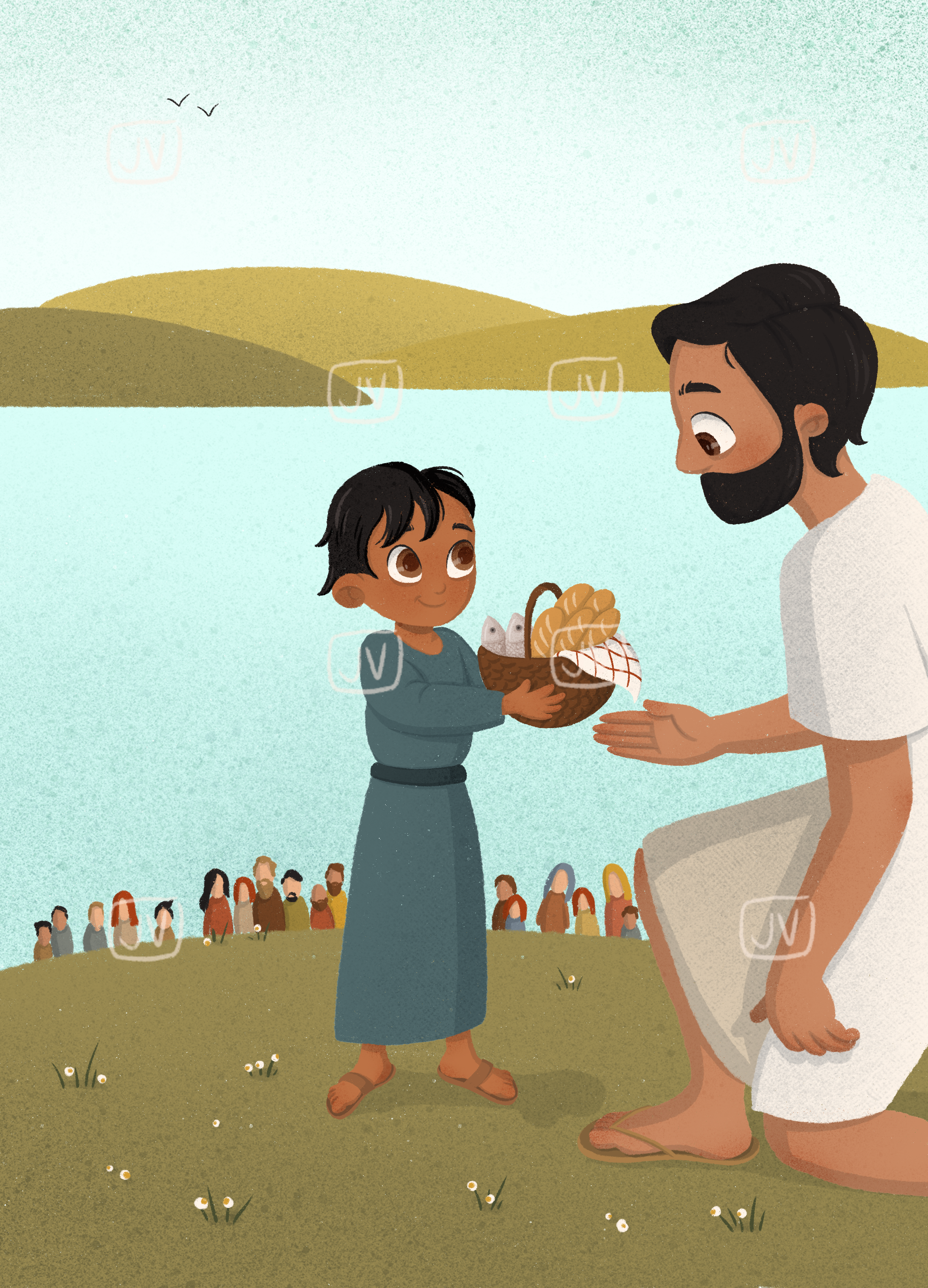
Artist: Jenske Visser

Testimonies
GenerousGiving - A Handful of Rice

Classical Commandments
Maimonides
Maimonides (Rabbi Moshe ben Maimon, 12th century) organized all 613 Torah commandments into a structured list. These linked items show where this Law of Messiah commandment overlaps with that classical framework.
Meir of Rothenburg
Rabbi Meir of Rothenburg (13th century, Germany) was a leading Talmudic authority. These reference numbers link this commandment to his halachic rulings.
Source and License
Based on The Law of Messiah - Torah from a New Covenant Perspective by Michael Rudolph and Daniel C. Juster.
License: CC BY-ND 4.0 (Attribution required, NoDerivatives). CC BY-ND 4.0
Disclaimer: the original content is authored by Rabbi Michael Rudolph and Rabbi Daniel Juster; additional notes or implementation details on this website are not part of their original work and do not represent their views.
Record source: The Law of Messiah - Torah from a New Covenant Perspective - Volume 1 & 2
Copyright note: Copyright © Michael Rudolph and Daniel C. Juster, The Law of Messiah, Torah from a New Covenant Perspective, Volume 1 & 2