DA37
We are to empathize with those who are imprisoned and mistreated.
Category: Neighbours & Brothers
Type: Positive
Form: Explicit
Source dataset: New Testament
Uniqueness: Unique
Classical commandment: No
New Covenant Literal Application
Applies to Person Categories: Everyone
 Jewish
 K'rov Yisrael
 Gentile
More explanation about the icons and New Covenant Literal Application
The New Covenant Literal Application Code (NCLA) is an interpretive guide used by the authors to indicate which person categories a mitzvah applies to, and at what level of literal compliance.
Each card above groups one application level such as mandated or optional. The three people icons show whether that application is meant for Jewish, K'rov Yisrael, or Gentile believers, and the male or female symbols show whether it applies to men, women, or both.
This code reflects the authors' interpretive opinion and is provided for prayerful consideration. The icon view is only a visual summary; the detailed codes and source explanation remain available below for careful study.
Detailed codes: GFm - Gentile female, mandated | GMm - Gentile male, mandated | JFm - Jewish female, mandated | JMm - Jewish male, mandated | KFm - K'rovat Yisrael female, mandated | KMm - K'rov Yisrael male, mandated

Bible references
Supportive NT Scriptures
- 2 Corinthians 3:17
- Luke 21:12
- Matthew 25:36
- Romans 7:22-25
Supportive OT Scriptures
- Hebrews 13:13
- Isaiah 42:6-7
- Psalms 69:34
- Psalms 102:20-23
- Psalms 146:7
- Zechariah 7:9
Bible verses copyright: PUBLIC DOMAIN except in the United Kingdom, where a Crown Copyright applies to printing the KJV. See http://www.cambridge.org/about-us/who-we-are/queens-printers-patent

Commentary
Rabbi Michael Rudolph
Scripture has much to say about prisoners and being imprisoned. 26 Some of the translations of Hebrews 13:3 (and other Scriptures) can be read as referring only to people in physical prisons, while others can be read to include people mistreated generally. It is especially so when one considers verses 1 and 2: “Let brotherly friendship continue; but don't forget to be friendly to outsiders; for in so doing, some people, without knowing it, have entertained angels.” In other Scriptures such as Isaiah 61:1 , imprisonment refers to the spiritual bondage of sin that separates us from God: “The Spirit of Adonai ELOHIM is upon me, because ADONAI has anointed me to announce good news to the poor. He has sent me to heal the brokenhearted; to proclaim freedom to the captives, to let out into light those bound in the dark;” Yeshua spoke similarly in Luke 4:18-19 after reading from the Scroll of Isaiah: “The Spirit of ADONAI is upon me; therefore he has anointed me to announce Good News to the poor; he has sent me to proclaim freedom for the imprisoned and renewed sight for the blind, to release those who have been crushed, to proclaim a year of the favor of ADONAI.” Not only did Yeshua employ the Good News to free those who were spiritually imprisoned, but we read in Luke 9:1-6 that he sent his disciples out to do the same: “Calling together the Twelve, Yeshua gave them power and authority to expel all the demons and to cure diseases; and he sent them out to proclaim the Kingdom of God and to heal. He said to them, "Take nothing for your trip- neither a walking stick nor a pack, neither bread nor money; and don't have two shirts. Whatever house you enter, stay there and go out from there. Wherever they don't welcome you, shake the dust from your feet when you leave that Sometimes the word “captive” is used when meaning prisoner. town as a warning to them." They set out and went through village after village, healing and announcing the Good News everywhere.” Considering the application of these Scriptures to Hebrews 13:3 – yes, we are called to minister to prisoners in physical prisons, but considering the greater numbers of those who are imprisoned by their sin and by not knowing God and Yeshua, how much more are we, Yeshua’s latter day disciples, called to empathize with, and bring the Good News to, those who are spiritually imprisoned and headed for a sentence of death.
Copyright © Michael Rudolph and Daniel C. Juster, The Law of Messiah - Torah from a New Covenant Perspective - Volume 3

Drawings
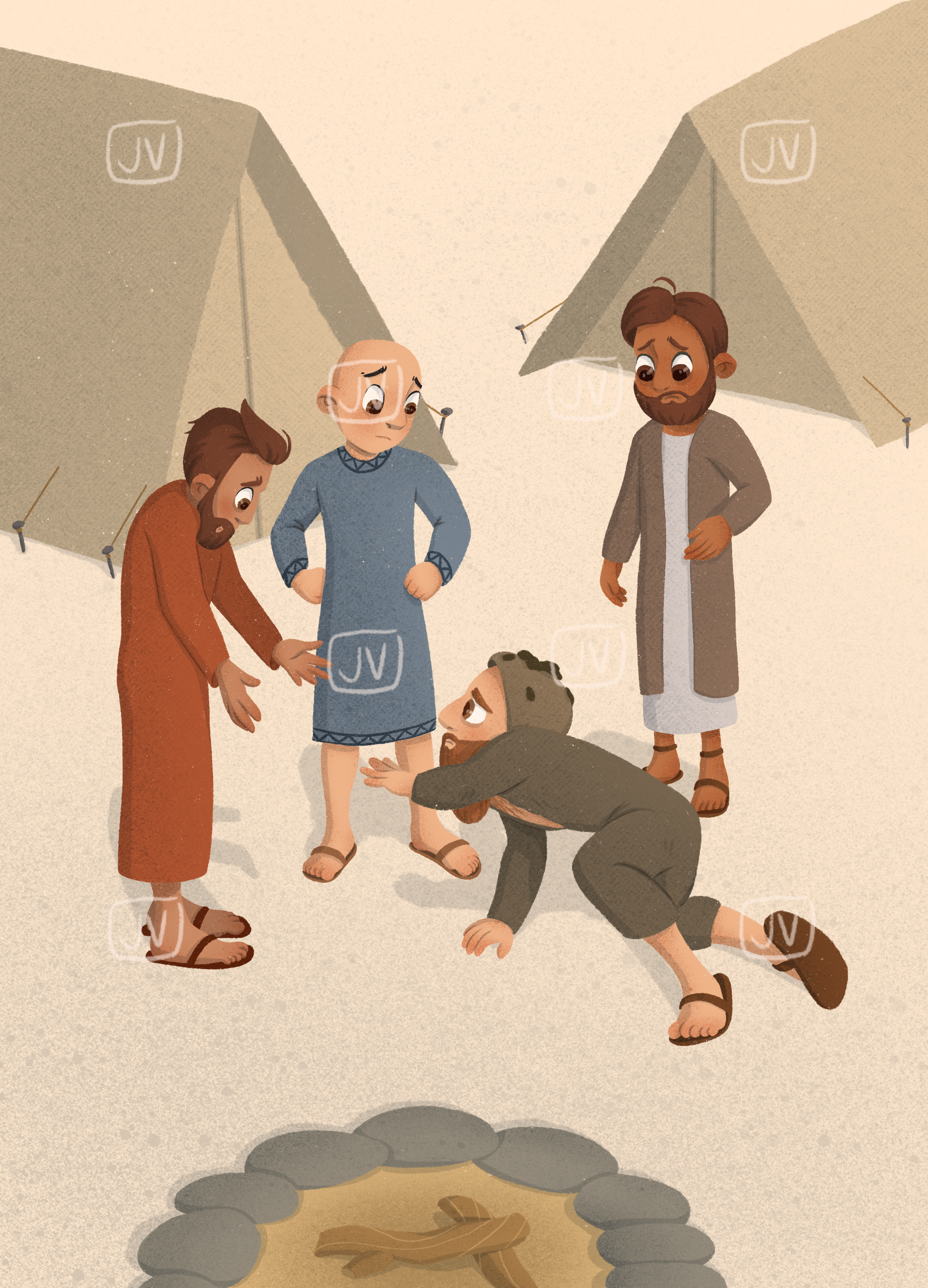
Artist: Jenske Visser

Source and License
Based on The Law of Messiah - Torah from a New Covenant Perspective by Michael Rudolph and Daniel C. Juster.
License: CC BY-ND 4.0 (Attribution required, NoDerivatives). CC BY-ND 4.0
Disclaimer: the original content is authored by Rabbi Michael Rudolph and Rabbi Daniel Juster; additional notes or implementation details on this website are not part of their original work and do not represent their views.
Record source: The Law of Messiah - Torah from a New Covenant Perspective - Volume 3
Copyright note: Copyright © Michael Rudolph and Daniel C. Juster, The Law of Messiah - Torah from a New Covenant Perspective - Volume 3