DA11
We are to bear the weaknesses of those who are not strong.
Category: Neighbours & Brothers
Type: Positive
Form: Explicit
Source dataset: New Testament
Uniqueness: Unique
Classical commandment: No
New Covenant Literal Application
Applies to Person Categories: Everyone
 Jewish
 K'rov Yisrael
 Gentile
More explanation about the icons and New Covenant Literal Application
The New Covenant Literal Application Code (NCLA) is an interpretive guide used by the authors to indicate which person categories a mitzvah applies to, and at what level of literal compliance.
Each card above groups one application level such as mandated or optional. The three people icons show whether that application is meant for Jewish, K'rov Yisrael, or Gentile believers, and the male or female symbols show whether it applies to men, women, or both.
This code reflects the authors' interpretive opinion and is provided for prayerful consideration. The icon view is only a visual summary; the detailed codes and source explanation remain available below for careful study.
Detailed codes: GFm - Gentile female, mandated | GMm - Gentile male, mandated | JFm - Jewish female, mandated | JMm - Jewish male, mandated | KFm - K'rovat Yisrael female, mandated | KMm - K'rov Yisrael male, mandated

Bible references
Key NT Scriptures
- Romans 15:1
Supportive NT Scriptures
- Acts 20:35
- Galatians 6:1-2
- John 15:13
- Luke 10:34
- Matthew 8:17
- Matthew 22:39
- Romans 8:26
- Romans 14:1
- Romans 14:21
- Romans 15:1-3
- 1 Thessalonians 5:14
Supportive OT Scriptures
- Leviticus 19:18
Bible verses copyright: PUBLIC DOMAIN except in the United Kingdom, where a Crown Copyright applies to printing the KJV. See http://www.cambridge.org/about-us/who-we-are/queens-printers-patent

Commentary
Rabbi Michael Rudolph
The meaning in Scripture of not being strong is not referring to muscular strength. It is referring to lack of spiritual strength – weakness of faith that results in sin and personal unfulfillment. One can also argue that Romans 15:1 applies to widows, orphans, and others who are not strong due to a handicap, disability, or circumstance. Supporting widows and orphans is the subject of Mitzvah BB3 in this compilation. This Mitzvah #DA11 instructs us to bear (i.e., carry – not bear with or condone) the weaknesses of those who are not spiritually strong or are handicapped with a disability; this means taking upon ourselves the weight (the responsibility) of ministering comfort, godly direction, and sometimes physical helps and provisions to such people provided, of course. they are willing to receive it. It is a weight on us because it is easier to avoid such people and their problems, and yet we are called to “love your neighbor as yourself” ( Matthew 22:39 ); in doing so, however, we must always remember that although we serve our fellow man, it is ultimately the Holy Spirit that helps us overcome our weaknesses ( Romans 8:26) . Related Mitzvot in Volumes 1 & 2 N01 Loving Our Neighbor, the Stranger, and Even Our Enemy N03 Helping Our Neighbor Who is in Need N09 Helping a Person Who Needs Rescue N11 Being Hospitable N14 Serving Our Neighbor N18 Being Compassionate & Merciful Toward Our Neighbor
Copyright © Michael Rudolph and Daniel C. Juster, The Law of Messiah - Torah from a New Covenant Perspective - Volume 3

Drawings
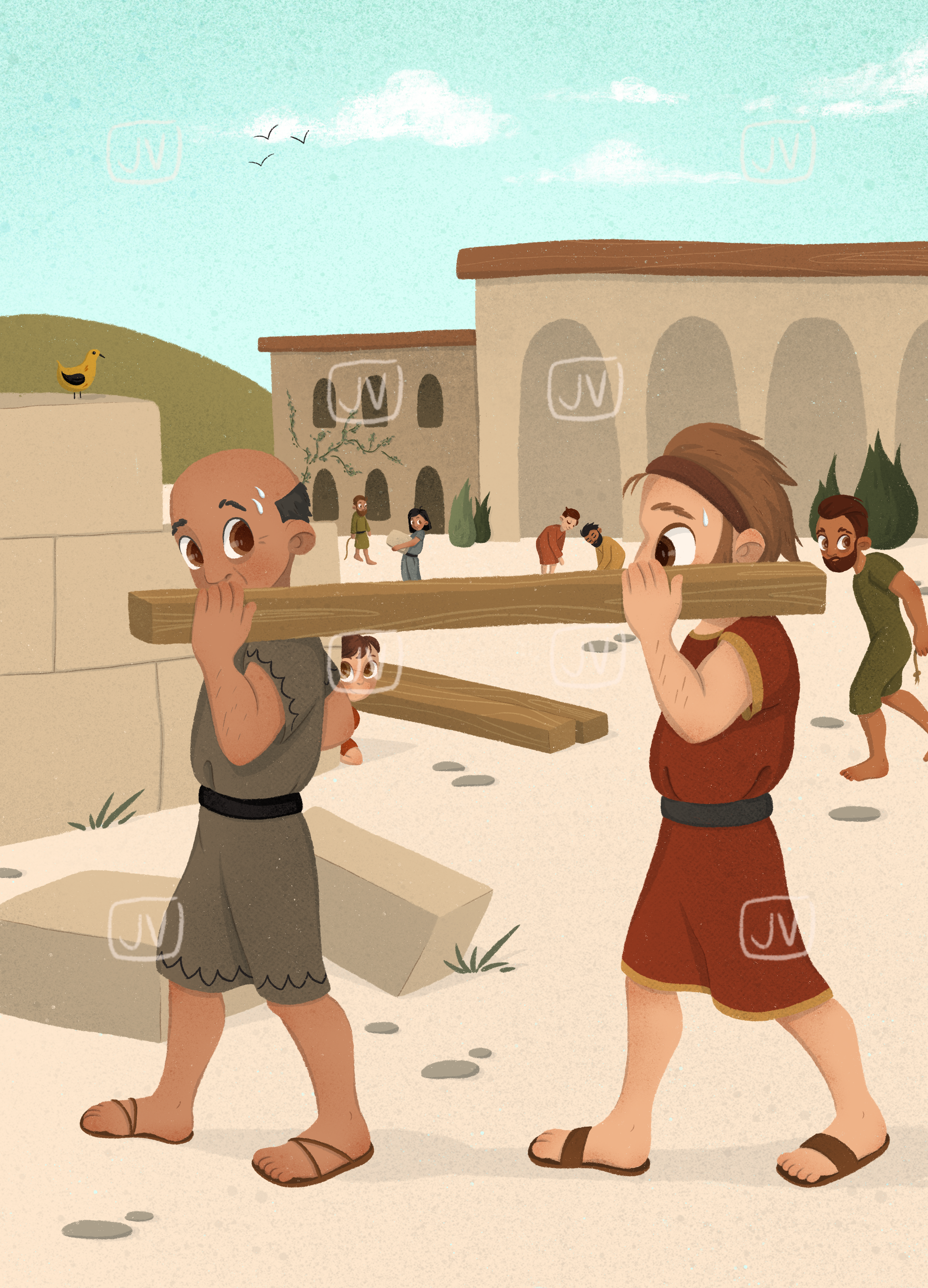
Artist: Jenske Visser

Source and License
Based on The Law of Messiah - Torah from a New Covenant Perspective by Michael Rudolph and Daniel C. Juster.
License: CC BY-ND 4.0 (Attribution required, NoDerivatives). CC BY-ND 4.0
Disclaimer: the original content is authored by Rabbi Michael Rudolph and Rabbi Daniel Juster; additional notes or implementation details on this website are not part of their original work and do not represent their views.
Record source: The Law of Messiah - Torah from a New Covenant Perspective - Volume 3
Copyright note: Copyright © Michael Rudolph and Daniel C. Juster, The Law of Messiah - Torah from a New Covenant Perspective - Volume 3