J5
We are to appoint elders in our communities to lead, pray, judge, teach, & make halachah.
Category: Justice
Type: Positive
Form: Explicit
Source dataset: Old Testament
Uniqueness: Unique
Classical commandment: No
New Covenant Literal Application
Applies to Person Categories: Everyone
 Jewish
 K'rov Yisrael
 Gentile
More explanation about the icons and New Covenant Literal Application
The New Covenant Literal Application Code (NCLA) is an interpretive guide used by the authors to indicate which person categories a mitzvah applies to, and at what level of literal compliance.
Each card above groups one application level such as mandated or optional. The three people icons show whether that application is meant for Jewish, K'rov Yisrael, or Gentile believers, and the male or female symbols show whether it applies to men, women, or both.
This code reflects the authors' interpretive opinion and is provided for prayerful consideration. The icon view is only a visual summary; the detailed codes and source explanation remain available below for careful study.
Detailed codes: GFm - Gentile female, mandated | GMm - Gentile male, mandated | JFm - Jewish female, mandated | JMm - Jewish male, mandated | KFm - K'rovat Yisrael female, mandated | KMm - K'rov Yisrael male, mandated

Bible references
Key NT Scriptures
- Acts 14:23
- Acts 15:1-31
- Acts 16:3-4
- Acts 20:28-31
- 1 Corinthians 6:1-5
- Hebrews 13:17
- James 5:14
- 1 Peter 5:1-3
- Revelation 4:10-11
- 1 Timothy 3:1-7
- 1 Timothy 5:17
- Titus 1:4-5
- Titus 1:7-14
Key OT Scriptures
- Deuteronomy 1:9-18
- Deuteronomy 16:18-20
- Deuteronomy 17:8-12
- Exodus 18:13-26
- Proverbs 31:23
- Ruth 4:1-2
Bible verses copyright: PUBLIC DOMAIN except in the United Kingdom, where a Crown Copyright applies to printing the KJV. See http://www.cambridge.org/about-us/who-we-are/queens-printers-patent

Commentary
Rabbi Michael Rudolph
This Mitzvah presents Scriptures supporting the statement: "We are to appoint elders in our communities to lead, pray, judge, teach, & make halachah ." The Scriptures on appointing, leading, praying, and teaching are self-explanatory, so this commentary is limited to discussing the role of elders making halachah . Halachot are rules that have the force of law in a Jewish community. Elders of a Messianic Jewish congregational (or network of congregations) community can declare halachah (law) for their congregation or network if their community acknowledges that they have been given the authority to do so by Scripture. Examples of common halachic rules for congregations are (a) membership in the congregation requires tithing; (b) membership in the congregation requires attendance at services; (c) pork products are not allowed to be served at congregational meals; and (d) men that assist in a Shabbat Torah service must wear a tallit gadol . During the Mosaic era, elders were appointed to sit at the gates of the Israelites' cities and judge cases that were brought to them (e.g. Deuteronomy 21:18-21 ; Ruth 4:1-2 ). With one exception, the cases decided by elders that we read about in the Bible are those in which a person lodges a complaint against another person. The exception, the one in which halachah is made, is Acts 15:1-31 . In that Scripture, elders and apostles gathered in Jerusalem to consider and rule upon how much of Torah (Mosaic Law) is required of the Gentiles. It is an inescapable necessity that elders of a community interpret God's Law (both Mosaic and New Covenant) for their respective communities, and make decisions as to the Law's application. If they do not, the practices of individuals and families within each community will be out of step with one another, confusion will result, and the community will not be able to function. Here is a Scripture from the Mosaic era that will illustrate my point; it is the familiar commandment to keep the Shabbat: Exodus 20:8-10 : Remember the day, Shabbat, to set it apart for God. You have six days to labor and do all your work, but the seventh day is a Shabbat for ADONAI your God. On it, you are not to do any kind of work - not you, your son or your daughter, not your male or female slave, not your livestock, and not the foreigner staying with you inside the gates to your property. But, what constitutes work? Continuing in one's income-producing occupation is obviously the kind of work that is prohibited by the Scripture, but what about an elderly or disabled person walking three miles to a synagogue? That is obviously hard work for them, so is it allowed? If the elders of the synagogue community determine that it is, or is not, and make their ruling a standard for that community, they are making halachah , and such decisions are absolutely necessary for a community of individuals to be able to function together. There are hundreds if not thousands of such examples, but I will present just one more for clarity; referring to the Feast of Unleavened bread, we read: Exodus 12:15 For seven days you are to eat matzah - on the first day remove the leaven from your houses. For whoever eats hametz [leavened bread] from the first to the seventh day is to be cut off from Isra'el. But what does it mean to eat matzah for seven days? Does it mean to eat it every day for seven days, or does it only mean to not eat leavened bread for seven days? And what constitutes chametz ? Clearly, bread risen with yeast is chametz , but is it also other foods that have yeast in them? And if we let a piece of matzah be exposed to the air long enough for yeast spores from the air to fall on it, does the matzah become chametz and therefore unacceptable to be eaten during Pesach and the week following? These are the kinds of decisions that are best made by the Jewish community in which we live, and when the elders of our community declare the answers to these and similar questions, they are making halachah for their community. The concept of halachah is not the same in the Messianic Jewish community as in the wider Jewish community. In the wider Jewish community, halachah is inextricably connected to certain ancient rabbis whose rulings on Mosaic Law (both written and oral) are recorded in the Talmud . Responsa are modern (and not-so-modern) era decisions and rulings made by respected Jewish scholars in response to questions of Jewish law put to them - also involving the written and (what they consider) oral Mosaic law. Messianic Jewish halachah , however, is fundamentally different in that it does not acknowledge an oral Torah , and looks to the Scriptures (Old and New Testaments) as the only divine authority. It does, from time to time, consider teachings in the Talmud - not for their authority, but for information about what is considered to be Jewish in the wider Jewish community, and occasionally for interpretive wisdom and cultural application. There is another way in which Messianic and "wider-Jewish-world" halachah are different, and that is that Messianic Judaism seeks God's interpretation of His Law, whereas Orthodox Judaism believes that it has the authority to interpret it themselves and even change God's Torah ; the origin of this belief can be found in TB Bava Metziah 59b , in which one translation states: 1 It has been taught: On that day R. Eliezer brought forward every imaginable argument, but they did not accept them. Said he to them: 'If the halachah agrees with me, let this carob-tree prove it!' Thereupon the carob-tree was torn a hundred cubits out of its place - others affirm, four hundred cubits. 'No proof can be brought from a carob-tree,' they retorted. Again he said to them: 'If the halachah agrees with me, let the stream of water prove it!' Whereupon the stream of water flowed backwards - 'No proof can be brought from a stream of water,' they rejoined. Again he urged: 'If the halachah agrees with me, let the walls of the schoolhouse prove it,' whereupon the walls inclined to fall. But R. Joshua rebuked them, saying: 'When scholars are engaged in a halachic dispute, what have ye to interfere?' Hence they did not fall, in honor of R. Joshua, nor did they resume the upright, in honor of R. Eliezer; and they are still standing thus inclined. Again he said to them: 'If the halachah agrees with me, let it be proved from Heaven!' Whereupon a Heavenly Voice cried out: 'Why do ye dispute with R. Eliezer, seeing that in all matters the halachah agrees with him!' But R. Joshua arose and exclaimed: 'It is not in heaven.' What did he mean by this? - Said R. Jeremiah: That the Torah had already been given at Mount Sinai; we pay no attention to a Heavenly Voice, because Thou hast long since written in the Torah at Mount Sinai, After the majority must one incline. The Mitzvot presented in this book are my and Dr. Juster's offered suggestions for Messianic Jewish (New Covenant) halachah , but can only become halachah if and when they are received as such by a Messianic Jewish community. 1. Online Soncino Babylonian Talmud Translation, Rabbi Dr. I. Epstein, editor, 2015.
Classical commentators
This Mitzvah is not addressed by any of the classical commentators.
Copyright © Michael Rudolph and Daniel C. Juster, The Law of Messiah, Torah from a New Covenant Perspective, Volume 1 & 2

Drawings
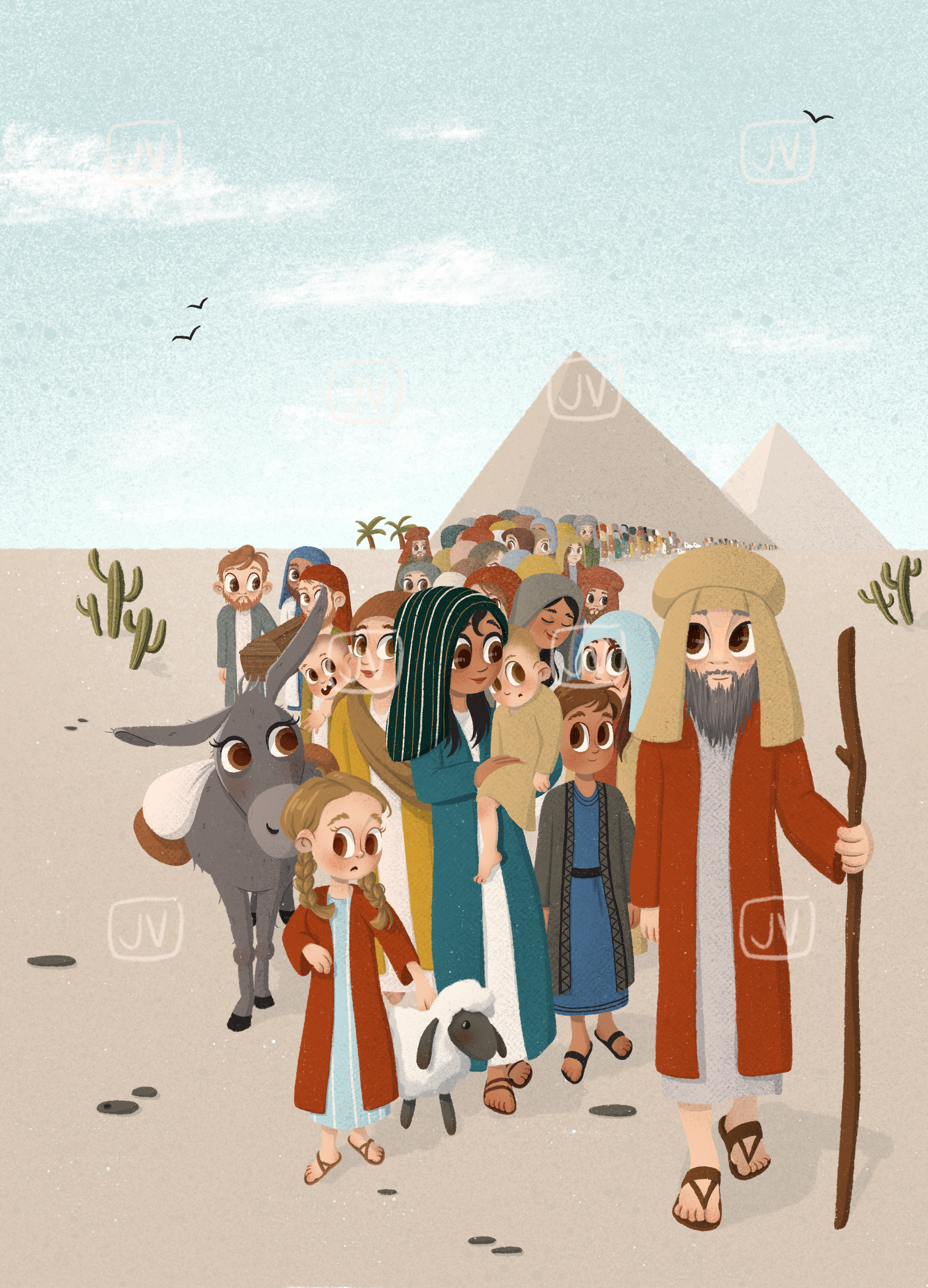
Artist: Jenske Visser

Source and License
Based on The Law of Messiah - Torah from a New Covenant Perspective by Michael Rudolph and Daniel C. Juster.
License: CC BY-ND 4.0 (Attribution required, NoDerivatives). CC BY-ND 4.0
Disclaimer: the original content is authored by Rabbi Michael Rudolph and Rabbi Daniel Juster; additional notes or implementation details on this website are not part of their original work and do not represent their views.
Record source: The Law of Messiah - Torah from a New Covenant Perspective - Volume 1 & 2
Copyright note: Copyright © Michael Rudolph and Daniel C. Juster, The Law of Messiah, Torah from a New Covenant Perspective, Volume 1 & 2