I6
We are to cease all idolatrous practices, and destroy associated objects and places that are within our domain and control.
Category: Idolatry, Heathens & the Occult
Type: Positive
Form: Explicit
Source dataset: Old Testament
Uniqueness: Unique
Classical commandment: Yes
New Covenant Literal Application
Applies to Person Categories: Everyone
 Jewish
 K'rov Yisrael
 Gentile
More explanation about the icons and New Covenant Literal Application
The New Covenant Literal Application Code (NCLA) is an interpretive guide used by the authors to indicate which person categories a mitzvah applies to, and at what level of literal compliance.
Each card above groups one application level such as mandated or optional. The three people icons show whether that application is meant for Jewish, K'rov Yisrael, or Gentile believers, and the male or female symbols show whether it applies to men, women, or both.
This code reflects the authors' interpretive opinion and is provided for prayerful consideration. The icon view is only a visual summary; the detailed codes and source explanation remain available below for careful study.
Detailed codes: GFm - Gentile female, mandated | GMm - Gentile male, mandated | JFm - Jewish female, mandated | JMm - Jewish male, mandated | KFm - K'rovat Yisrael female, mandated | KMm - K'rov Yisrael male, mandated

Bible references
Key NT Scriptures
- Acts 17:22-24
- Colossians 3:5
- 1 Corinthians 10:19-21
- 2 Corinthians 10:3-5
- Ephesians 6:11-13
Key OT Scriptures
- Deuteronomy 3:21-22
- Deuteronomy 7:1-5
- Deuteronomy 7:16-21
- Deuteronomy 7:25-26
- Deuteronomy 12:1-3
- Deuteronomy 13:7-16
- Deuteronomy 13:17-19
- Deuteronomy 17:2-5
- Deuteronomy 18:20
- Deuteronomy 20:16-18
- Deuteronomy 25:17-19
- Exodus 22:19
- Exodus 23:23-24
- Jeremiah 48:10
- Leviticus 26:30
- Numbers 24:12-20
- Numbers 33:50-53
Supportive OT Scriptures
- 2 Chronicles 33:15-17
- 1 Kings 22:42-45
- 2 Kings 14:1-4
- 2 Kings 15:1-5
- 2 Kings 15:32-35
- 2 Kings 18:1-5
- 2 Kings 23:4-16
Bible verses copyright: PUBLIC DOMAIN except in the United Kingdom, where a Crown Copyright applies to printing the KJV. See http://www.cambridge.org/about-us/who-we-are/queens-printers-patent

Commentary
Rabbi Michael Rudolph
The Mosaic Law calls for a complete destruction of idolatry including, in many cases, killing idolaters themselves. During the time of Moses, the Israelites lived under a theocracy that was governed directly by God that made these practices reasonable, but today we live under (and are subject to) governments that are secular. The laws under which we live today do not allow us to apply many of the Mosaic Laws literally, and they should not allow it, because the governments under which we now live are not ruled by God. That notwithstanding, God's extremely negative attitude toward idolatry should be adopted as our own, and we should seek the Holy Spirit for how to bring destruction to idolatry in every way that is permissible in our individual circumstances. Idolatry, in its broadest terms, comprises not only the worship of false deities, but anything that we allow to displace God in ruling our lives. Colossians 3:5 lists some of them and, although slaying idolatrous people is not authorized in the New Covenant, we are called to put to death instead, things such as sexual immorality, impurity, evil desires, and greed (see also, Matthew 6:24 ). Because today we live under secular laws and governments, we cannot do away with objects and places of idolatry that are owned by others. We cannot, for example, smash the statue of Buddha in our neighborhood Chinese restaurant, nor burn down the Hindu temple across town. We can, however, destroy and remove from our own houses and domains under our control, idolatry-connected art, jewelry, books, videos, and other such items that are owned by us, and we should. Similarly, we should not play games or view videos that depict idolatrous or occult practices, and should not show approval of those that do. As for the broader definition of idols, i.e. associations, things and practices that draw us toward unholy thoughts or deeds or that exercise power over us that is not from God - these we must renounce and do away with, and help others to do so as well.
Classical commentators
The mitzvot of Maimonides and HaChinuch ascribe credibility to a literal contemporary interpretation of the Mosaic Scriptures, whereas Meir does not. For example, in his RN186 and RN187, Maimonides states 1 that we must "slay all the people of an apostate city", and "exterminate the seven Nations that inhabited the Land of Canaan." Meir simply does not write corresponding mitzvot for these two. 1. Maimonides, Sefer Ha-Mitzvot of Maimonides , v. 1, pp. 199-202 (London: The Soncino Press Ltd, 1967).
Copyright © Michael Rudolph and Daniel C. Juster, The Law of Messiah, Torah from a New Covenant Perspective, Volume 1 & 2

Drawings
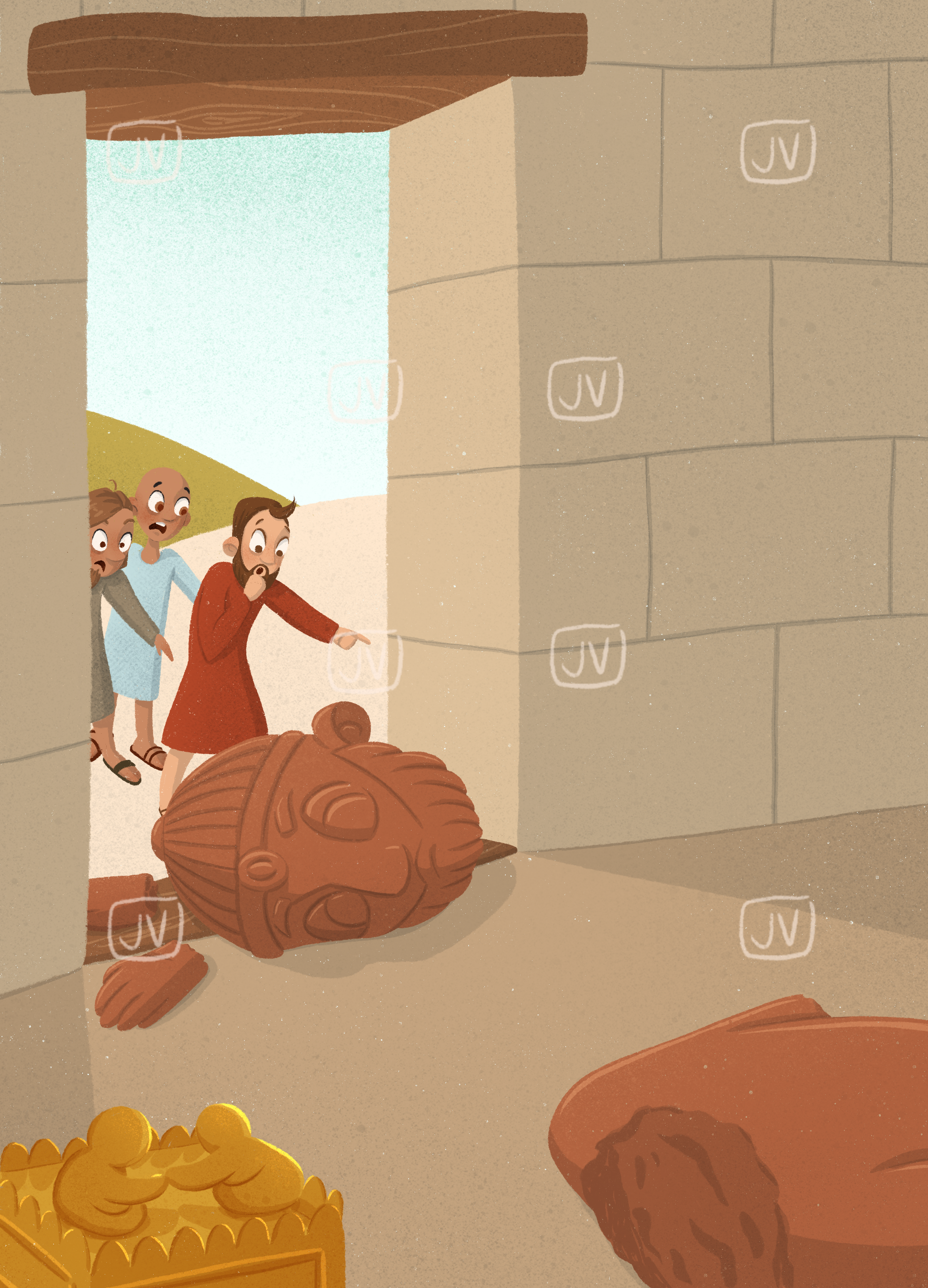
Artist: Jenske Visser

Classical Commandments
Maimonides
Maimonides (Rabbi Moshe ben Maimon, 12th century) organized all 613 Torah commandments into a structured list. These linked items show where this Law of Messiah commandment overlaps with that classical framework.
Meir of Rothenburg
Rabbi Meir of Rothenburg (13th century, Germany) was a leading Talmudic authority. These reference numbers link this commandment to his halachic rulings.
Source and License
Based on The Law of Messiah - Torah from a New Covenant Perspective by Michael Rudolph and Daniel C. Juster.
License: CC BY-ND 4.0 (Attribution required, NoDerivatives). CC BY-ND 4.0
Disclaimer: the original content is authored by Rabbi Michael Rudolph and Rabbi Daniel Juster; additional notes or implementation details on this website are not part of their original work and do not represent their views.
Record source: The Law of Messiah - Torah from a New Covenant Perspective - Volume 1 & 2
Copyright note: Copyright © Michael Rudolph and Daniel C. Juster, The Law of Messiah, Torah from a New Covenant Perspective, Volume 1 & 2