BA52
We are to set our hope on God.
Category: God & Yeshua
Type: Positive
Form: Explicit
Source dataset: New Testament
Uniqueness: Unique
Classical commandment: No
New Covenant Literal Application
Applies to Person Categories: Everyone
 Jewish
 K'rov Yisrael
 Gentile
More explanation about the icons and New Covenant Literal Application
The New Covenant Literal Application Code (NCLA) is an interpretive guide used by the authors to indicate which person categories a mitzvah applies to, and at what level of literal compliance.
Each card above groups one application level such as mandated or optional. The three people icons show whether that application is meant for Jewish, K'rov Yisrael, or Gentile believers, and the male or female symbols show whether it applies to men, women, or both.
This code reflects the authors' interpretive opinion and is provided for prayerful consideration. The icon view is only a visual summary; the detailed codes and source explanation remain available below for careful study.
Detailed codes: GFm - Gentile female, mandated | GMm - Gentile male, mandated | JFm - Jewish female, mandated | JMm - Jewish male, mandated | KFm - K'rovat Yisrael female, mandated | KMm - K'rov Yisrael male, mandated

Bible references
Key NT Scriptures
- 2 Corinthians 1:10
- 1 Timothy 4:10
- 1 Timothy 6:17
Supportive NT Scriptures
- Acts 24:15
- Hebrews 6:19
- 1 Peter 3:5
- Romans 5:3-5
- Romans 15:12-13
- 1 Timothy 5:5
- Titus 1:1-3
- Titus 2:11-13
Supportive OT Scriptures
- Lamentations 3:21-26
- Psalms 31:25
- Psalms 33:22
- Psalms 39:8
- Psalms 42:6
- Psalms 71:5
- Psalms 130:7
- Psalms 146:5
Bible verses copyright: PUBLIC DOMAIN except in the United Kingdom, where a Crown Copyright applies to printing the KJV. See http://www.cambridge.org/about-us/who-we-are/queens-printers-patent

Commentary
Rabbi Michael Rudolph
Hoping is wishing for something in the future combined with an expectation or sense of the likelihood that what is hoped for will (or at least can) come to pass. One cannot rationally hope for that which one believes is impossible, but with God all things are possible. When considering the expression “hope on/in God,” it is reasonable to ask “hope for what?” We can hope for anything we want, but its use in the Bible assumes that we are hoping for that which God wants as well. Hope and faith are not the same. Hope is the anticipation of something that we desire that may or may not come to pass, whereas faith, when properly applied, knows that something will come to pass because God has revealed it. Hebrews 11:1 says it this way: “Now faith is being sure of what we hope for and certain of what we do not see.” This Mitzvah (“We are to set our hope on God”) infers that we should not hope for anything or in anyone other than in God.
Copyright © Michael Rudolph and Daniel C. Juster, The Law of Messiah - Torah from a New Covenant Perspective - Volume 3

Drawings
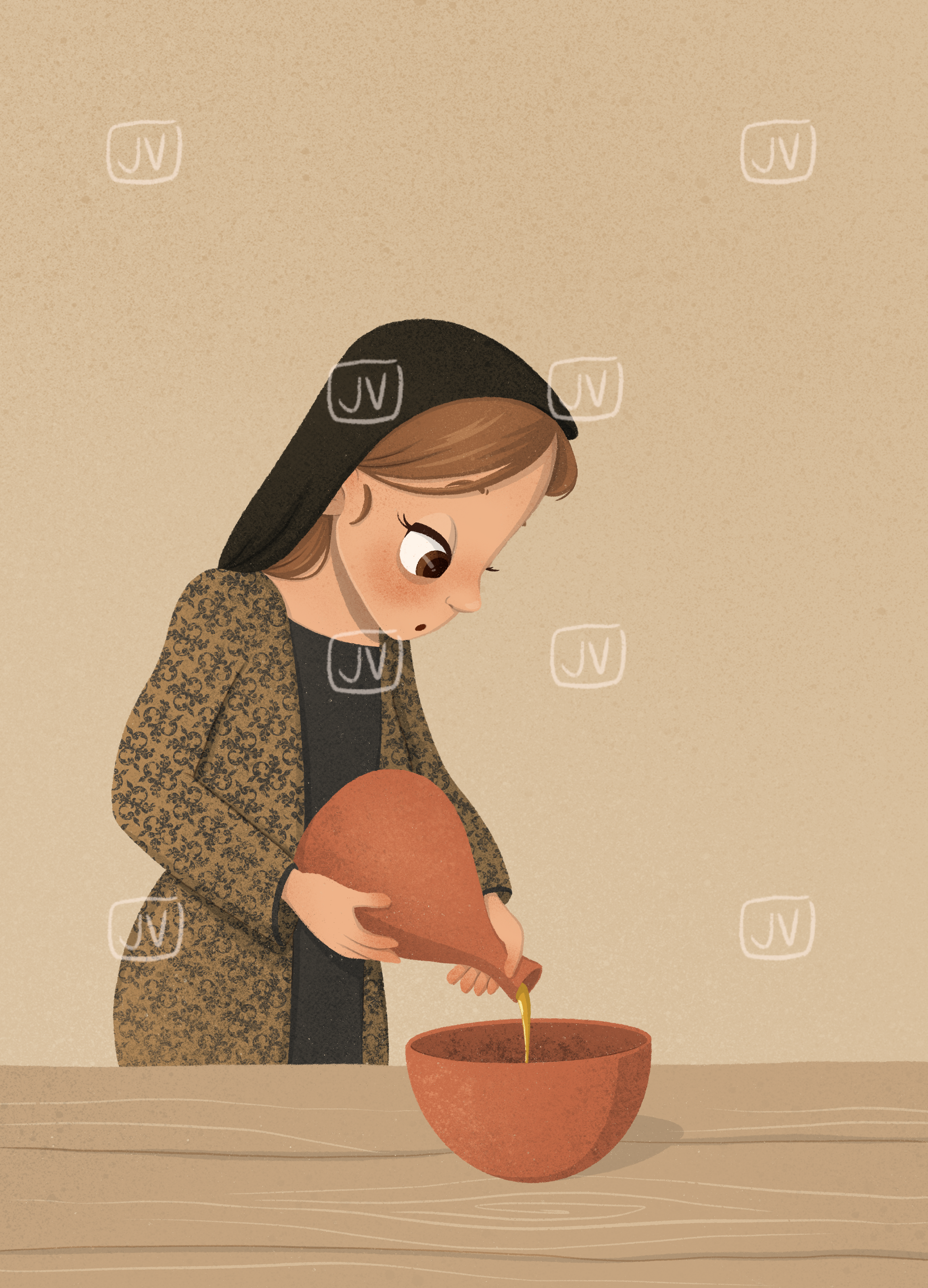
Artist: Jenske Visser

Source and License
Based on The Law of Messiah - Torah from a New Covenant Perspective by Michael Rudolph and Daniel C. Juster.
License: CC BY-ND 4.0 (Attribution required, NoDerivatives). CC BY-ND 4.0
Disclaimer: the original content is authored by Rabbi Michael Rudolph and Rabbi Daniel Juster; additional notes or implementation details on this website are not part of their original work and do not represent their views.
Record source: The Law of Messiah - Torah from a New Covenant Perspective - Volume 3
Copyright note: Copyright © Michael Rudolph and Daniel C. Juster, The Law of Messiah - Torah from a New Covenant Perspective - Volume 3